by Bryan & Heather
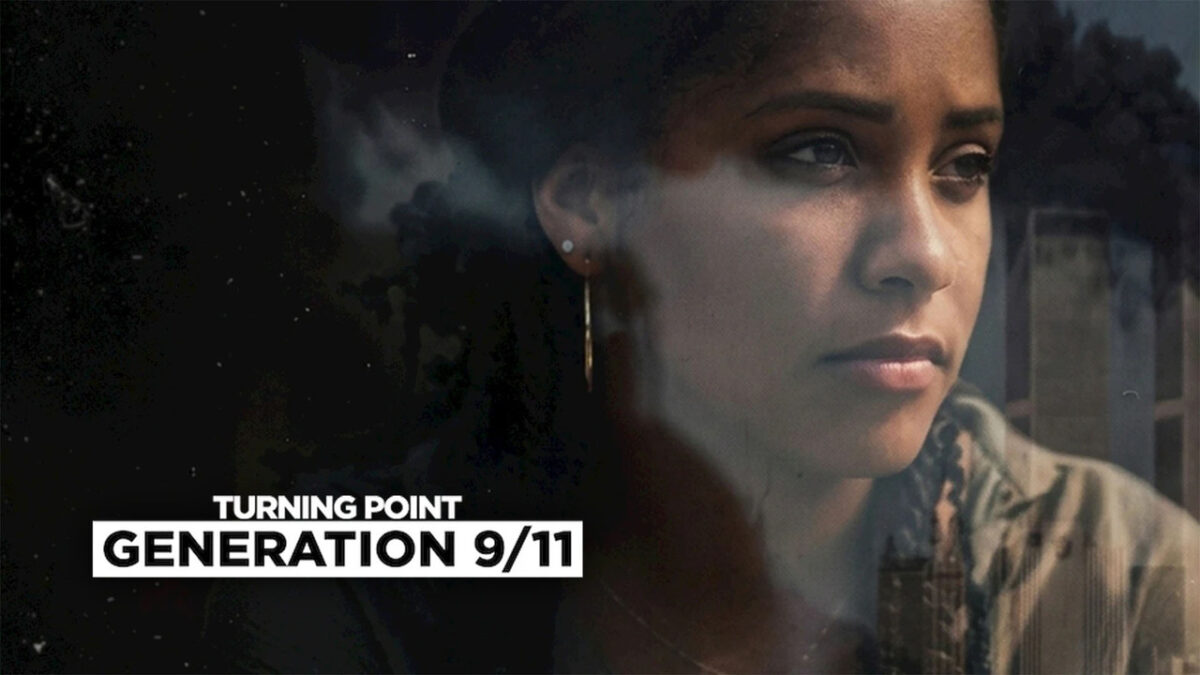
This month marked the 25th anniversary of the September 11, 2001 terror attacks on the United States. Five years ago, the 20th anniversary was marked by an outpouring of documentaries both new and re-mastered, as we broke down in our post at the time. This time around felt different, more subdued, and we didn’t notice the same level of media coming from all directions. There was one program that crossed our radar, however, from the same studio and series as one we featured in that 2021 post (and as one other documentary we’ve reviewed here on Concerning History). Netflix’s Turning Point collection of docuseries has turned out works on subjects spanning the second half of the twentieth century from the Cold War to Vietnam to the War on Terror, and in the fall of 2026 it would deliver a 90-minute special revisiting the lives of those affected indirectly by the worst day in contemporary American history.
While it does summarize the events of that September day, Generation 9/11 is not a 9/11 documentary per se, or at least not in the way one might usually expect. The program opens with a reflection on the frank reality that it has now been a full generation since the attacks, and so there is now a full generation of young adults who were either born afterward or were so young as to have no memory of them. Indeed, the point is fast approaching when more people will be alive who were not alive on 9/11 than who were. The filmmakers then use this premise as an opportunity to conduct an oral history of sorts, sitting down with various individuals who were not in the Towers or Pentagon, but who were peripherally involved with the day itself or some of its cascading legacy. Muslim New Yorkers, shop owners who saw the debris cloud roll by their windows, children of individuals who died on the planes and in the buildings, and young men who would enlist in the military and take part in the War on Terror all tell their stories while the documentary ruminates on how much of our modern world is the product of this seminal historical moment.
One might notice the beginnings of a problem comparing that summary to the documentary’s title, however, and it was one we noted early on. The phrase “Generation 9/11” seemed to us to imply this would focus on the generation of children who grew up in the immediate wake of the attacks and all that resulted—our generation, essentially—exploring how they remember the event, how they’ve processed it, and how they conceive of the long shadow it’s cast over their lives. While there certainly were a number of individuals who fit that description (as mentioned above), none could be described to just be “normal” kids. Hearing interviews of people whose lives were directly affected did not feel like the kind of new, unique angle we expected.
All this might have been more or less fine if Generation 9/11 had given all its disparate generational voices room to breath and treated their stories with thoughtful interpretation and analysis. As it was, however, it feels like the documentary tried to bite off much more than it could reasonably digest in its short runtime. There is little if any explicit narrative throughline or context to tie it all together, especially after leaving the events of September 11 itself behind, and each individual seems to only have a few minutes to speak, without any supporting or developing analysis, before the film dashes off to the next. The only exception is the final third, where multiple Marines involved in the suicide bombing of Abbey Gate checkpoint in Kabul during the US withdrawal from Afghanistan in 2021 (all of whom were children during 9/11 and commented on enlisting due to the volume of patriotic, “cool” material that ensued) relate the events of that day. It’s an interesting, and tragic, little aside in its own right, but feels less than deserving of a full third of the special, especially when other stories received so little. It is of course relevant to the topic at hand as an illustration of how the decisions taken in response to 9/11 continue to live with us over two decades later, but Turning Point: 9/11 and the War on Terror already did that with much more time, information, and skill than is present here.
Our experience with Generation 9/11, coming on the heels of the disappointing Turning Point: The Bomb and the Cold War, has unfortunately led us to suspect that perhaps the Turning Point series may be more misses than hits, and that its original War on Terror installment might have been an exception. Lack of strong organization seems to be a common element, which is a shame; there was a lot of good raw material here, and we could almost see glimpses of a different, more compelling and compellingly self-aware piece. It struck us early on that all the language surrounding people having no memory of 9/11 was presented as self-evidently astonishing, almost horrible or tragic. Yet this is simply the reality of time, and of how history works. At some point, everything passes beyond living memory, so what makes September 11 any different? Efforts to unpack that question, to examine similar reactions (or their absence) to the 25th anniversaries of Pearl Harbor or Vietnam or Hiroshima and Nagasaki would have been a fascinating bit of public historiography and could also have laid the groundwork for discussing 9/11 as the first tragedy that was broadcast live to the nation on the 24-hour news cycle. It also could well have served another latent theme, that of regret for the ‘timeline’ not taken. At one point, the daughter of Flight 93’s First Officer LeRoy Homer, Jr. explains that she often feels like she was meant to have a different, better, more ideal life that vanished forever upon the death of her father—but no larger connections are ever made to her wistful, haunting regret. The sentiment could have served as a powerful metaphor for the whole country and all our different 9/11 generations as we reflect on national surveillance, costly and mismanaged foreign wars, surging xenophobia, and a general sense that it was all supposed to have turned out better than this. Generation 9/11 really could have been a special examination of national and historical memory of one of the defining moments of the twenty-first century as we enter its second quarter. Ironically, we’re left with this lackluster reality.