by Bryan & Heather
While January 2025 saw us embark on our long-awaited trip to Mobile, Alabama, it also offered the opportunity to continue our exploration of frontier history and, specifically, sites related to the Creek War. As it so happens, we had actually followed events in reverse order, starting with the final battle of the conflict at Horseshoe Bend, then visiting the site of an earlier skirmish at which Andrew Jackson had “adopted” a young Muskogee boy. Continuing that pattern, our drive back from Mobile offered the opportunity to visit Fort Mims, sight of the “massacre” of settlers that is held to have transformed simmering tensions into full-scale war. Though owned and run by a private organization, the site seemed to offer interpretation worth our time, even featuring a reconstructed log blockhouse. As we all know by now, though, online appearances are often deceiving.
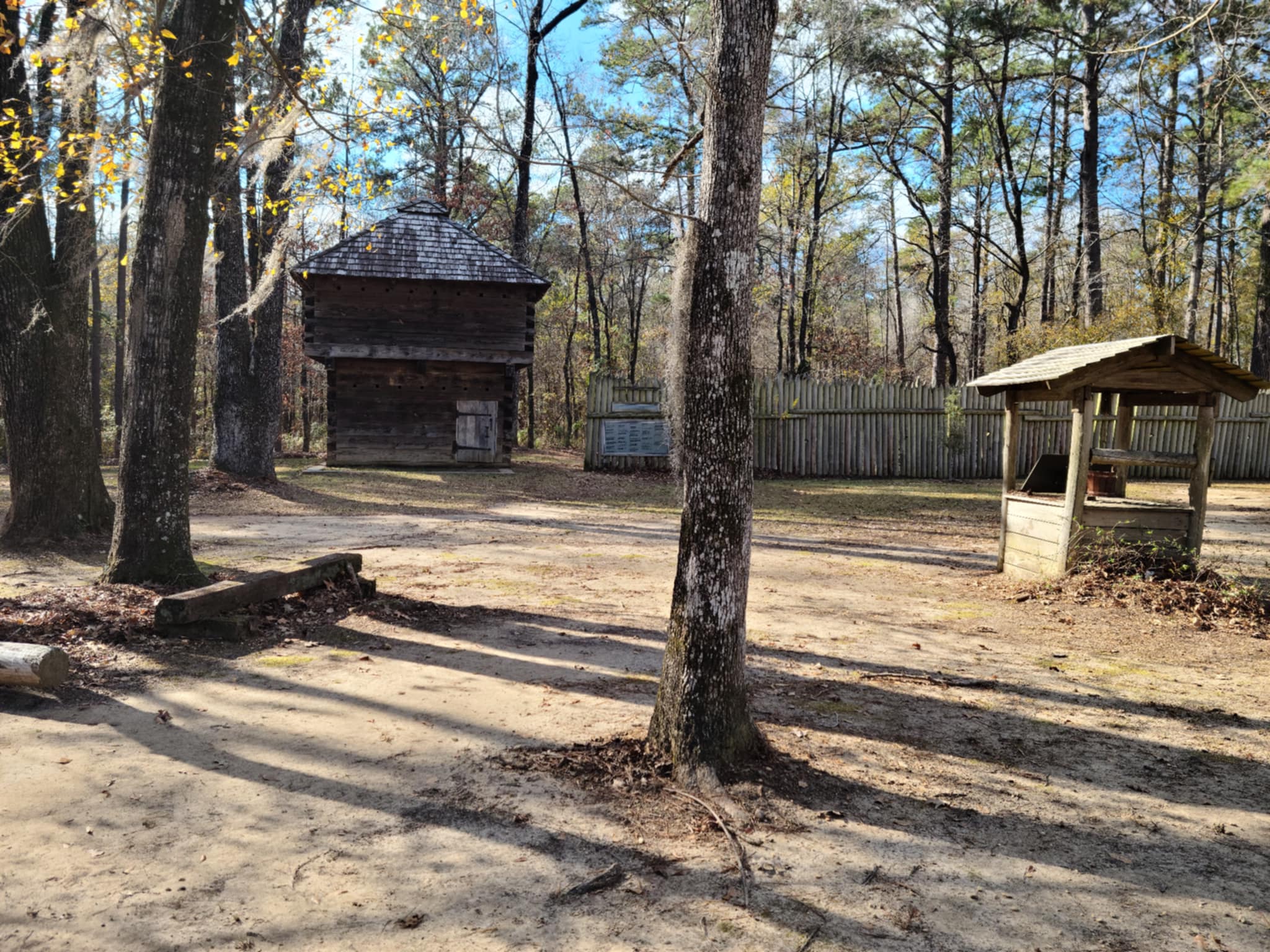
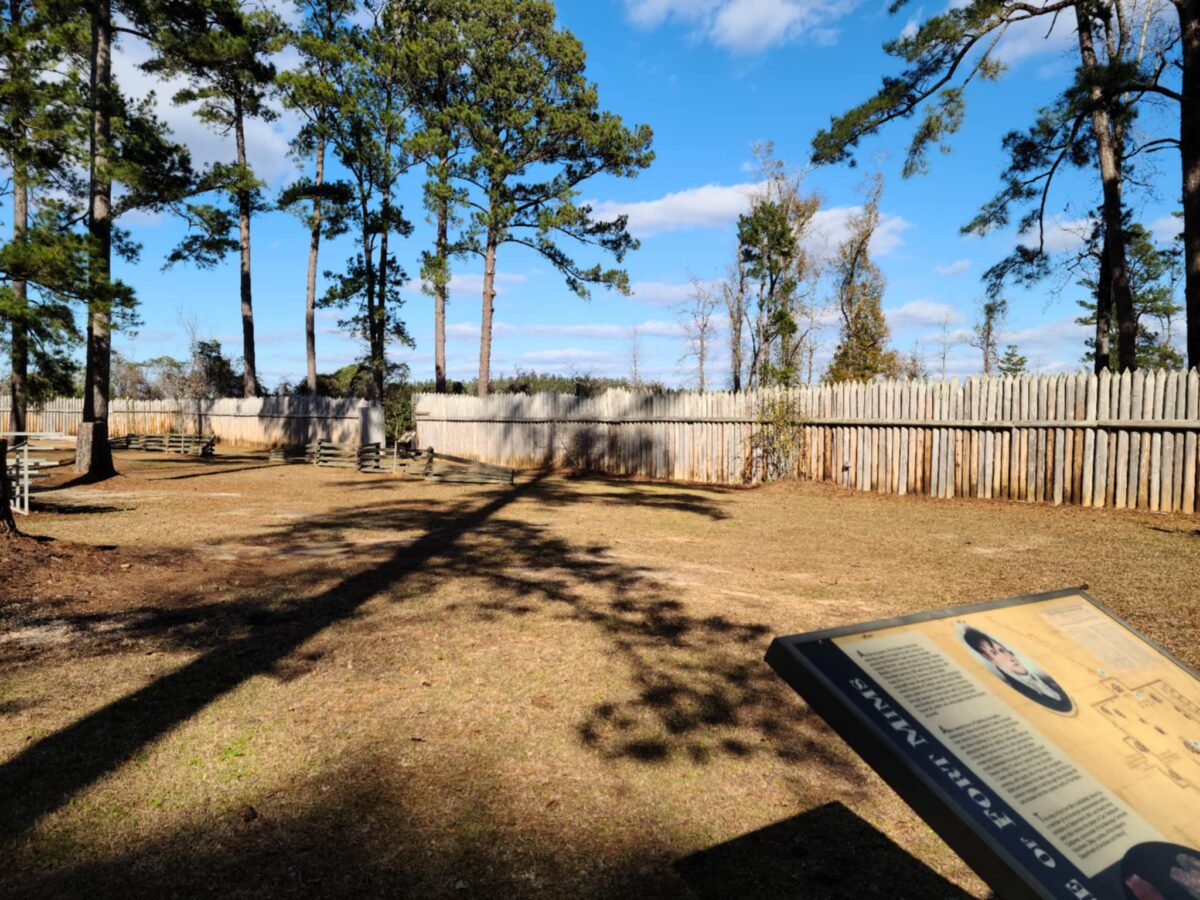
Our first clue that all was not as we had expected was when our route to Fort Mims led us right through a mobile home neighborhood. This was no shortcut, but the final approach, and indeed Fort Mims itself sits on only a few acres of land right across a quiet rural street from private homes. This isn’t entirely out of the ordinary; even major NPS sites like Fredericksburg battlefield in Virginia are nestled within current communities. The blockhouse was indeed there, and incorporated into an extensive reconstruction of three sides of a log palisade, to boot!
The nineteenth-century inspiration for these makeshift fortifications, as we learned, were erected not by the United States Army but by a mix of frontier militia and civilians amid rising fears of attacks by Red Stick Muskogee forces across the region. Fort Mims was centered on the plantation (really more of a large rustic homestead) of the Mims family, which had been surrounded by a blockhouse-reinforced palisade to offer refuge to local farmers after reports of Red Stick warriors roaming the area. On August 29, 1813, two slaves reported seeing painted Native Americans in the fort’s vicinity, though they were ignored by the militia officer commanding the defenses and one was even beaten for lying. The next morning, a scout raised another warning, which was also dismissed. That afternoon, a force of nearly one thousand Red Stick warriors burst from the surrounding woods and charged the open east gate of the palisade, quickly gaining control of the outer perimeter and its gun loopholes. A renewed assault broke militia resistance in the inner enclosure and, by 5 PM, the battle was over. Casualty figures are murky, but it seems the Red Sticks killed about half (247 bodies were later found by a relief force) of the approximately 500 militia, settlers, slaves, and friendly Native Americans at Fort Mims and took most of the rest captive, suffering roughly 100 casualties themselves. The battle sent shockwaves through the southwestern frontier and ultimately led to the dispatch of a coalition of local militias under Andrew Jackson to punish the hostile Upper Muskogee villages the settlers deemed responsible in what would become known as the Creek War.
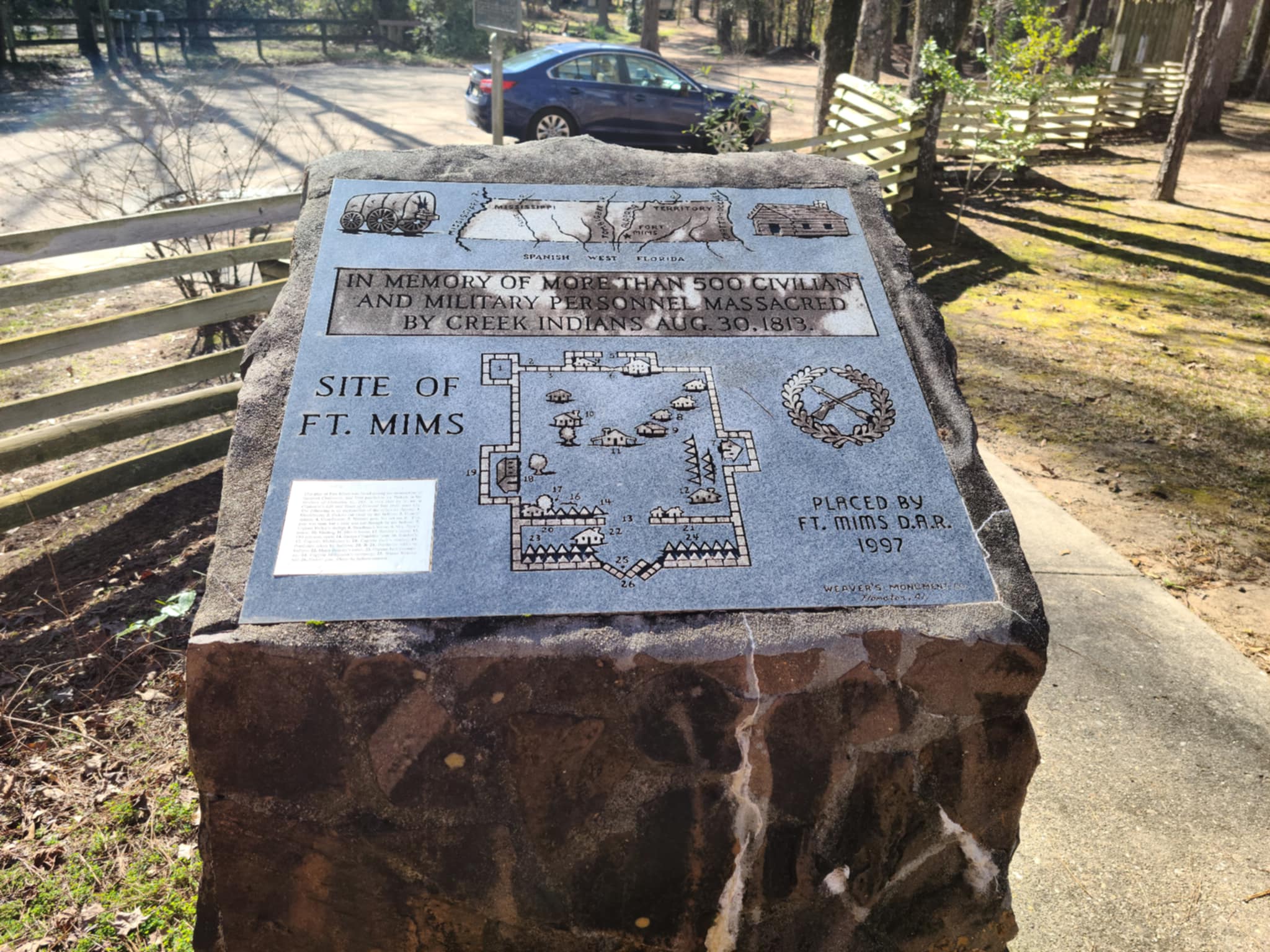
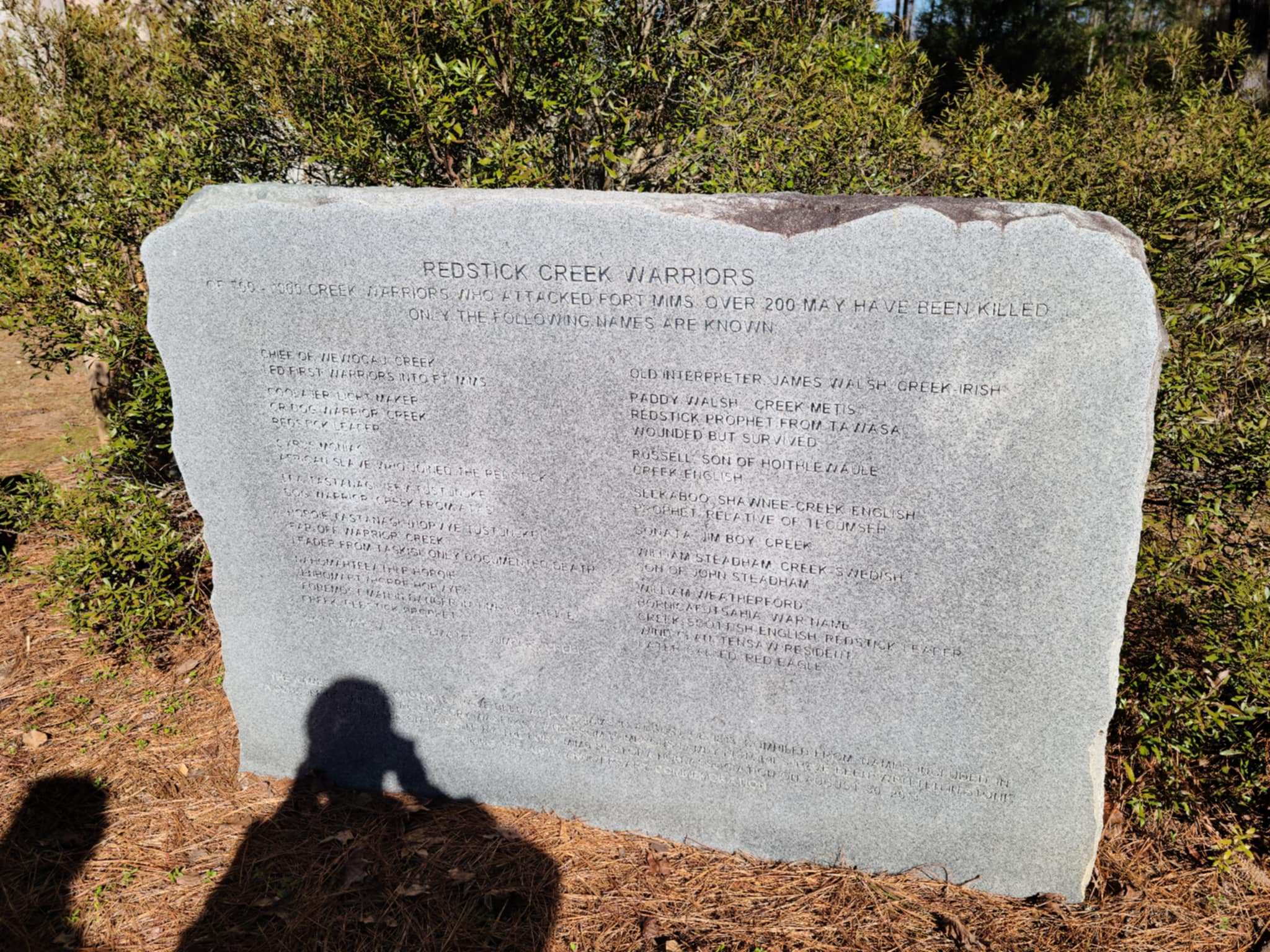
A narrative of not only the events surrounding Fort Mims’ fall but of some of the daily life around the enclosure could be found on various interpretive signs and markers around the reconstructed fort, and it really was a treat to see what the fortifications would have looked like in something approaching real size. We likely should have expected some memorialization of the “massacre” from one of the vaguely chauvinist heritage groups that litter the south (in this case, the Daughters of the American Revolution) that ignored the reasons why the Red Sticks were attacking settlers in the first place, but we were also encouraged by later efforts commemorating the Muskogee, as well.
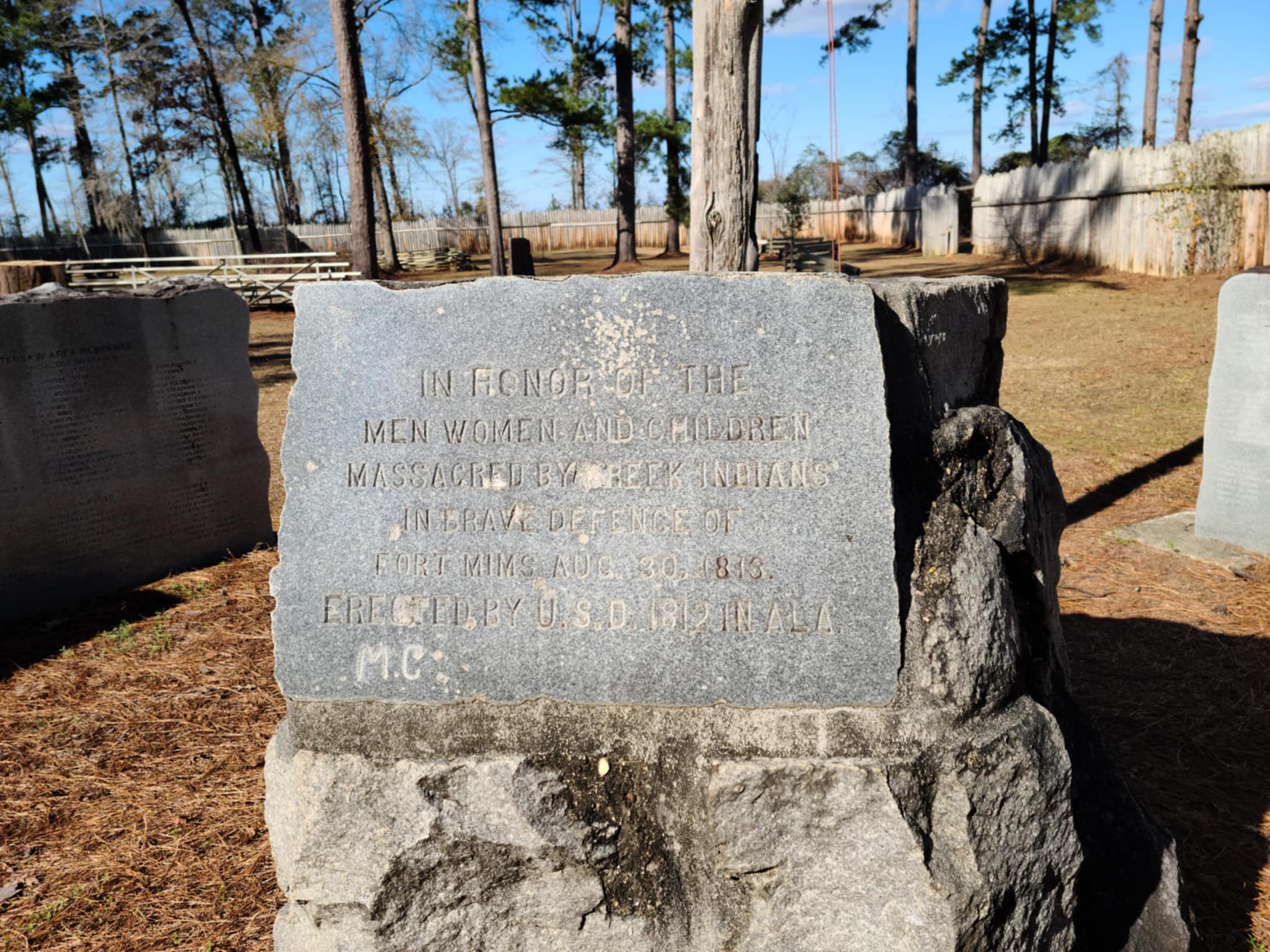
It’s unfortunate, then, that Fort Mims couldn’t build on such a promising interpretive foundation. The site’s small museum was closed and locked, with no indication anywhere, even online, of what its hours might be. The blockhouse was not a reproduction of the fort’s own blockhouse, per se, but created in Georgia and later gifted here—and when we looked inside, it was revealed to only be an exterior
reproduction, filled only by a gravel floor and none of the actual accoutrements of a frontier bastion. In fact, we learned that we weren’t even standing in the right spot; in order to preserve the integrity of the original site and protect it from looters and general erosion, the present reconstruction is located nearby, and the exact location is not disclosed. Perhaps worst of all, the bleachers used in the annual reenactment events that the private organization hosts over the anniversary of the battle each year were left in the middle of the fort, giving it a distinct vibe of being less of historic site and more of a historic playground (and we couldn’t help but wonder if perhaps the museum is only open that one week a year).
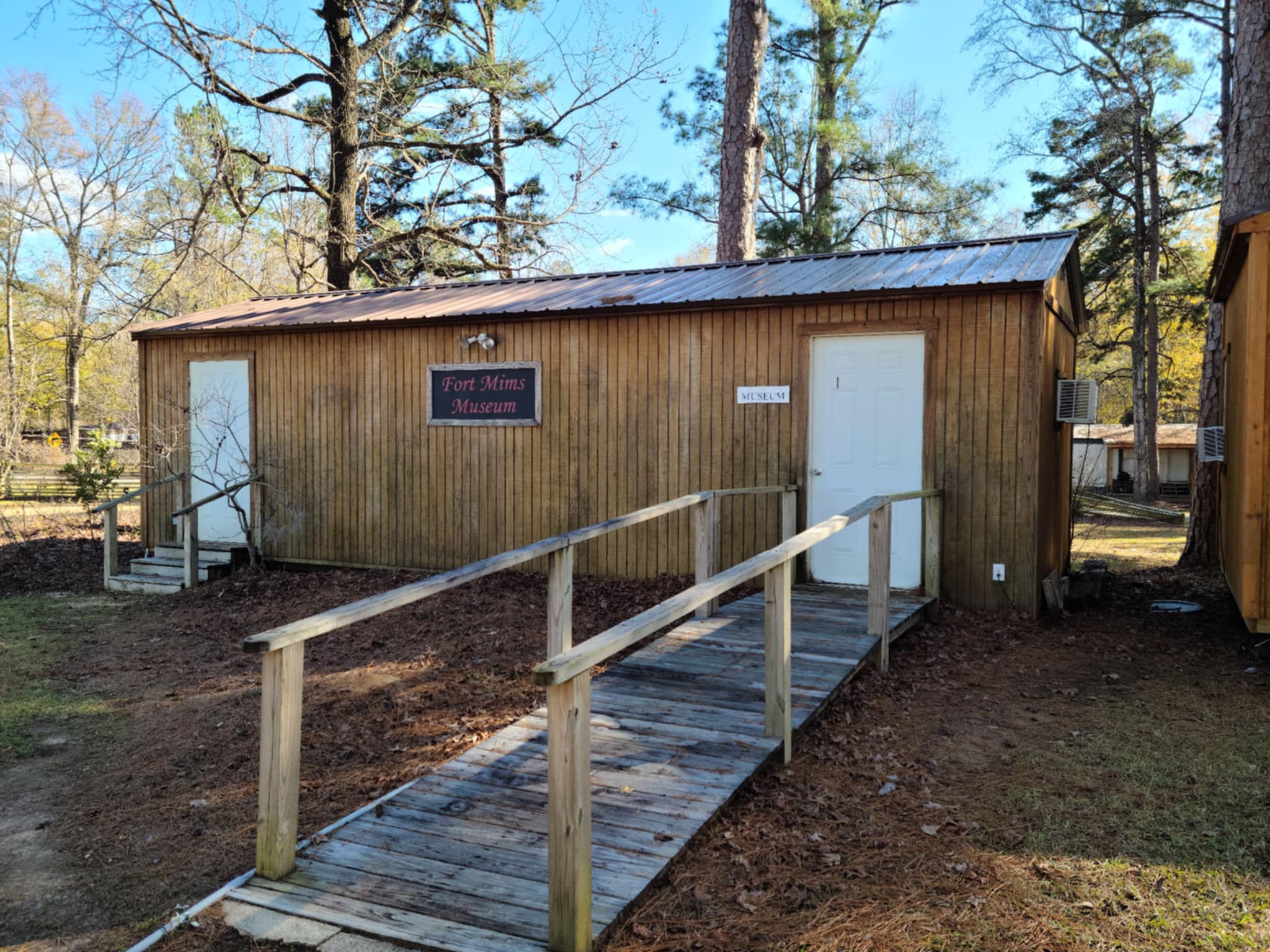
While we wouldn’t say we were entirely disappointed by our experience at Fort Mims, we were a bit let down—though the ability to do a quick walk-and-read certainly helped us get home faster after a long weekend trip! It’s a shame that such an important event in local history isn’t more extensively interpreted, but in our current times, and especially in states where even vital services like public education are chronically underfunded, it is regrettably the reality. Maybe just put the bleachers away when they’re not being used.