This review has been a long time coming. To be honest, my work in British history has never been all that concerned with the monarchy, most of it taking place after the Glorious Revolution had effectively neutered its guiding role in politics and turned the royals into supporting, then marginal, characters in governance. That said, a Netflix prestige drama centered on the reign of Queen Elizabeth II was always going to draw me in at some point. Elizabeth ascended to the throne in 1952 and died in 2022, serving for seventy years—the longest of any monarch in British history. Such a show must necessarily cover many topics I have studied, then, from decolonization to the changing role of the United Kingdom during the Cold War and right up through the early decades of my own life. Even once I began watching, The Crown’s six season did not go quickly, often being interrupted by other, more pressing shows that drew my attention. At long last, however, and far behind everyone else, I have finished one of the most fascinating and infuriating shows I’ve recently watched.
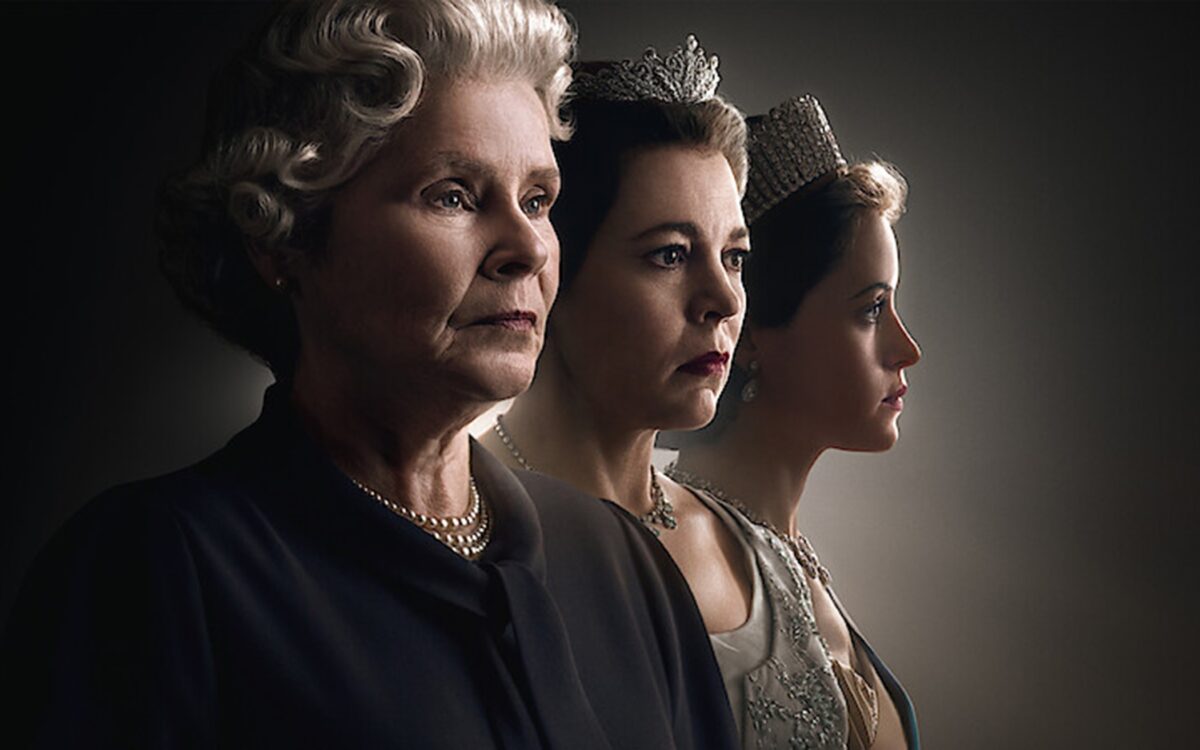
Spanning almost sixty years, from the wedding of Elizabeth Windsor to Phillip Mountbatten in 1948 to the wedding of their son Charles to Camilla Parker Bowles in 2005 (and with some flashbacks to the Second World War and even earlier), The Crown is a monumental effort of historical storytelling. Three different actresses play Elizabeth (Claire Foy, Olivia Colman, and Imelda Staunton, respectively) across the different stages of her life, with every two seasons bringing a complete change of cast to reflect the passage of time. Major figures and events in British and world history parade across the screen, but so too do more minor episodes likely unfamiliar to non-British audiences. At every stage, the material culture is exquisite and the actual history portrayed is quite good; even the casting takes care to be at least close to the appearance of characters’ real life counterparts, sometimes eerily so. Yet the main point of The Crown is not these events themselves but their influence on Elizabeth and the rest of her family, emphasizing the humanity of the royals and the complicated, restrictive nature of the role of the monarchy in the modern world.
Indeed, it is that central role of monarchy and the royal family as institutions acting upon individual humans that so frustrated me while watching. This is no fault of the show itself; on the contrary, the demands of this role wherein such a concept as work/life balance cannot exist and tradition can never truly be questioned are portrayed with simultaneous tragedy and sympathy for those caught in its web. It is incredibly rare, if not nonexistent, for any major character to be able to do what they truly desire. In most cases, a sense of duty, propriety, Constitutionalism, or some combination of the three effectively hamstring any move towards real happiness and often result in depression, neuroses, and general unhappiness. What I couldn’t stand—though is admittedly accurate to history and human nature—was the utter lack of self awareness on display as The Crown’s characters suffered through their often-completely avoidable problems. To hear people living in the twentieth, and later twenty-first, century earnestly express the notion that the royals are somehow different than the rest of society, divinely anointed for some special role in society, should be enough to make one’s blood boil, and Elizabeth’s confusion and dismay at her emotionally stunted grown children (while refusing them the option of divorce to escape toxic, mutually destructive marriages until very late) would be amusing if it wasn’t so tragic. The closest any royal comes to explicitly recognizing how un-special this system is when Elizabeth wryly observes to Margaret Thatcher that she is really no different from one of the many African tribal leaders Thatcher had just casually and racistly dismissed—though any-monarchist sentiments do populate the show quite often, from public surveys and quiz shows about the future of the monarchy to, my favorite, an article that points out the prohibition on a member of the royal family marrying a Catholic violates the United Nations Declaration of Human Rights. Ironically, though perhaps fittingly if my suspicions about the showrunners’ goals are correct, the very nature of humanizing Elizabeth and her family condemns the system of monarchy all the more strongly.
My two major critiques of The Crown are more stylistic than historically substantive. I applaud the decision to switch actors for older versions of the show’s characters rather than relying on old age makeup or hand waving, but I personally found it odd that the switches between the second and third season and then fourth and fifth season were not accompanied by any kind of time jump or reintroduction of familiar characters now wearing unfamiliar faces. The accompanying effect was not so much the passage of time as the sudden aging of characters over what is supposed to be only months or weeks, if not days—sometimes leading me to wonder if earlier episodes should have felt different because characters were not as young as their actors seemed. It also disrupted the continuity of the history on display, as many actors brought their own unique reads to the role (chief among them Matt Smith’s, Tobias Menzies’, and Jonathan Price’s Philip Mountbatten) that leads the series to feel more like an anthology collection of three different shows than one single narrative. Equally unfortunate, in my mind, was the gradual move towards storytelling driven more by the personal history of the royal family than by global history more generally. The introduction of soon-to-be Princess Diana in the fourth season signals a sea change; more episodes in this back half of the show are devoted to Charles and Diana’s relationship than not, and hardly any revolve around a major non-monarchy event. In the most egregious example, the 9/11 attacks are shoehorned into an episode centered on Elizabeth’s sister Princess Margaret and given only a few offhand lines!
While these weaknesses hold The Crown back from being one of the best historical dramas out there, it remains an engrossing experience for any who study twentieth century British history or have lived through any of the decades it encompasses. As with any adaptation, it should not be taken for straight history, but in its broad strokes, it provides the kind of empathy and humanism which elevates our study, understanding, and learning from the past, however distant or recent it may be.