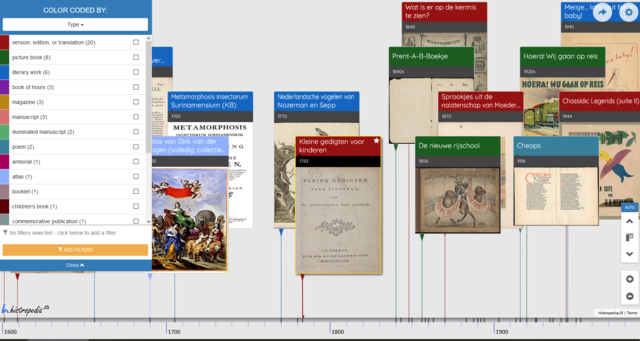
A couple years ago, a visit to the Birmingham Civil Rights Institute inspired me to write a short piece critiquing the use of overly-cluttered, impenetrable timelines as part of museum exhibits. At the time, I thought of it as little more than an isolated exercise discussing a small facet of historical interpretation that I happened to notice. I never thought I’d ever be writing another post on the topic again, but as so often happens, once you notice something, it seems to appear everywhere you look. So now, two years later, here I am again. Let’s talk timelines in history books.
Anyone who’s read a serious history book knows that the main text of any work is only one part of the total pages bound up in that volume. Notes, bibliographies, further reading, and other such citation-related material are standard, but often other material such as images, maps, and appendices are also included to provide readers with a more complete and enriching experience. Over the past few years, I have noticed that timelines, sometimes alternately labeled as “chronologies,” have increasingly been making appearances in this supplementary material. Initially, I thought little of it. I am a huge proponent of including maps with historical texts to help orient readers and better visualize the spatial elements of a historian’s narrative (though I certainly have thoughts on how that can be done poorly, as well), and timelines seemed quite similar. General histories of wide scope can be especially disorienting, as there are few ways to cover political, cultural, and social history without splitting at least some topics away from necessary context, and I could see how referring back to a timeline could be a helpful tool for those who have previously not read much on that subject. Two recent experiences of mine, however, seem to indicate some authors are including chronologies for quite a different purpose.
The first came as I read Stephen Platt’s Autumn in the Heavenly Kingdom. Platt weaves a compelling, almost artistic, narrative of the bloodiest conflict of the 19th century, China’s Taiping Civil War. From his introduction, Platt makes clear that he does not intend to relate the comprehensive history of the civil war, just a particular history that focuses on certain figures’ points of view and his own themes of the international elements of the conflict and role of misinformation and prejudice in guiding its ultimate course. I had some issues with this from the beginning, as I am of the opinion that the subtitle’s inclusion of The Epic Story of the Taiping Civil War strongly indicates that the volume would feature a comprehensive, not selective, history. What really made me take notice, though, was when Platt’s narrative did not even include the details of many of his subjects’ final fates! I looked them up online, never even thinking there might be a resource inside the cover but outside the main text that contained the information. It was only when Francis mentioned that he had found it by consulting Autumn in the Heavenly Kingdom’s appended chronology that my mental wheels began to turn.
A month or two after finishing Autumn in the Heavenly Kingdom, I began reading Peter Wilson’s magisterial history of the Holy Roman Empire, Heart of Europe (review coming sometime next year on Concerning History). As I flipped through the back matter searching for a page count to record in my personal reading log, I came across the work’s chronology—but this was to ordinary timelines what annotated bibliographies are to a bare works cited page. It ran for over fifty pages (perhaps somewhat understandable, given the Empire lasted for nine centuries) and its entries extended for full paragraphs! As I dove into the text itself, the reasons for such an extensive effort became readily apparent: Wilson had decided to organize his book entirely by subject, and did not provide any chronological narrative of the Empire’s history at all! From what I can surmise, this timeline was meant to provide the missing material for readers.
One can probably tell that I am not overly pleased with the organizational decisions made by these two authors and/or their editors. It is a core principle of writing that everything necessary to one’s work should be contained entirely within the main text itself. I personally would add a corollary: unless a work of history is explicitly focused on only certain facets of a topic, it is the duty of the historian to provide a chronological narrative of political history, however brief, first and foremost. The idea that an author can sidestep this obligation by including an article-long timeline in supplementary material is, in my opinion, an abdication of scholarly responsibility and a sign of poor writing and editing skills more generally. I dearly hope that this (mis)use of timelines does not become more prevalent that it already is, but I fear that won’t be the case. If it does proliferate, I fear that the general, accessible-yet-academic histories I so love may swift become an endangered species. Only time will tell.