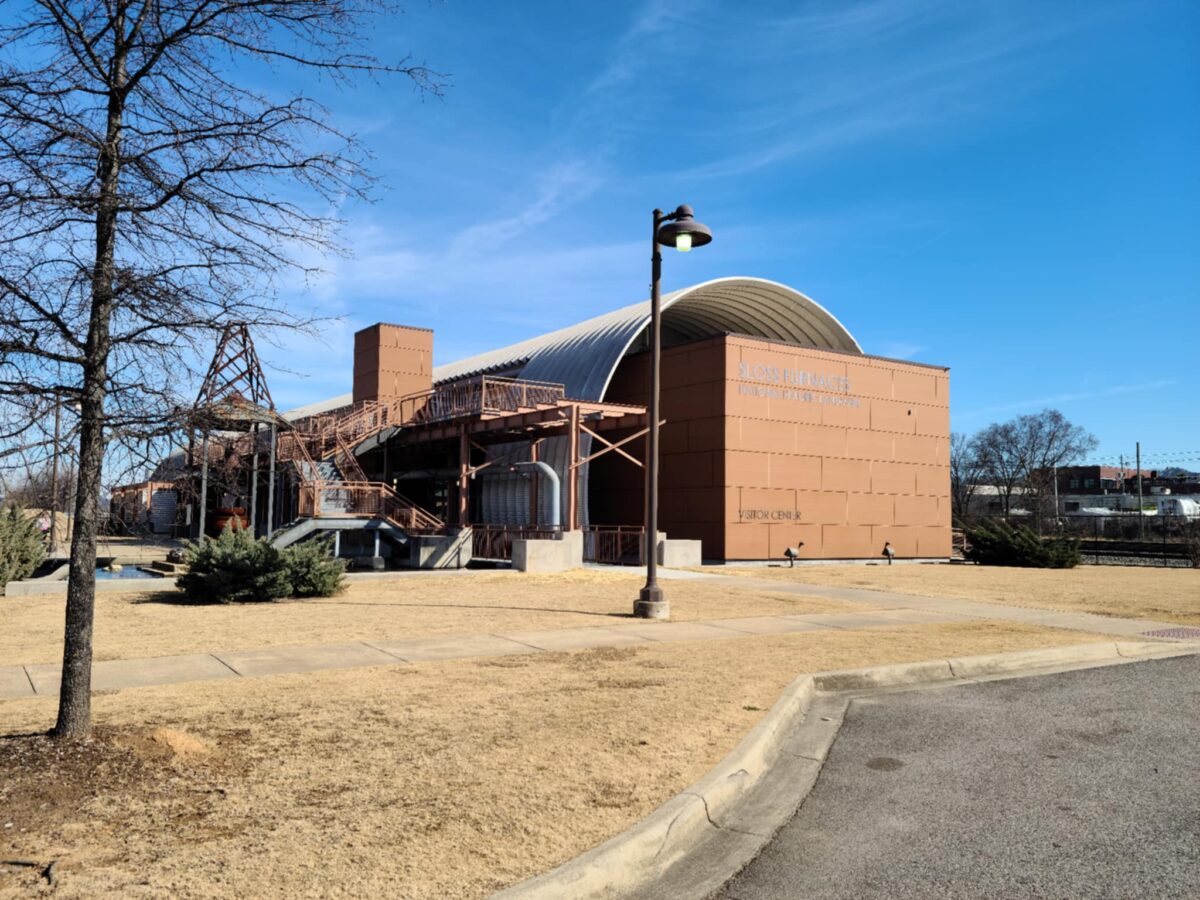
by Bryan & Heather
When we moved to Birmingham, Alabama four years ago last week, it was simply the latest in a fairly long line of relocations we’ve both made across the past decade. Little did we know, however, that our new home city actually had a unique historical connection to Bryan’s hometown of Pittsburgh, Pennsylvania. While Pittsburgh was in many ways the industrial capital of the United States during the late 19th and early 20th centuries—resulting in heavy pollution and enduring cultural landmarks as the nickname the “Steel City” and their professional football team bearing the name the Steelers—the city of Birmingham was actually better suited for the production of those bedrocks of heavy industry, iron and steel. Only there were found all the necessary ingredients for making steel (coal, limestone, and iron ore) in one relatively localized geographical area, and the resulting products were in fact so much cheaper than Pittsburgh steel that the robber barons and monopolistic trusts of the era imposed the “Pittsburgh tax” on Birmingham: a surcharge levied on all Birmingham steel to artificially inflate its price and ensure it did not outcompete the firms of Western Pennsylvania. Most traces of the steel industry have vanished from Birmingham (and Pittsburgh, too) over the past few decades, but one prominent old plant still towers over the eastern approach to downtown: Sloss Furnaces. Given all this shared history, it was somewhat of an oversight that we’d delayed so long before visiting, but in January of 2025 and, fittingly, joined by Bryan’s parents, we finally made it to those titanic relics of a bygone industrial era.
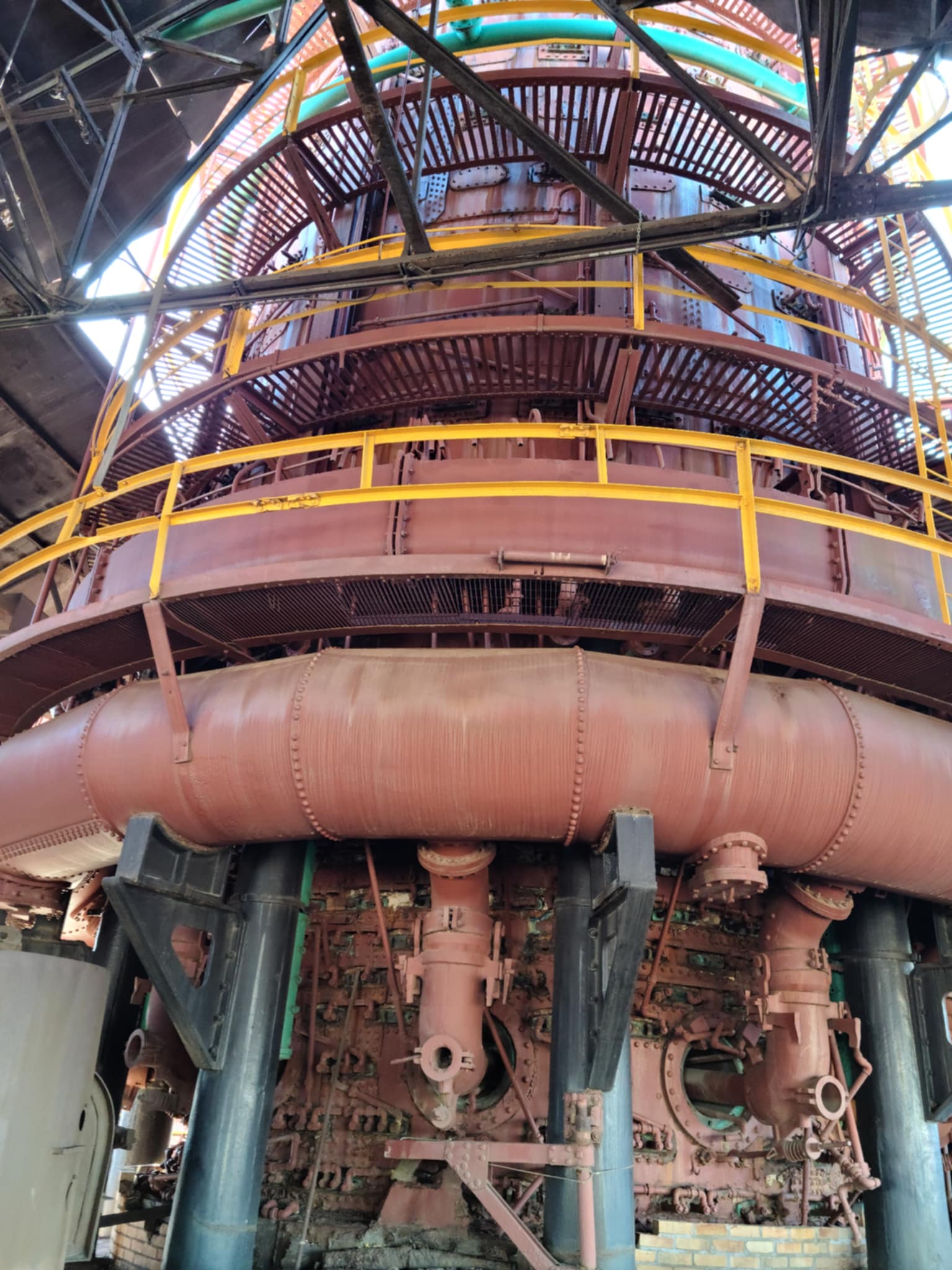
Sloss was founded in 1881 by former Confederate colonel James Withers Sloss just as the soon-to-be-city of Birmingham was rising out of what had formerly been sleepy agricultural towns. Operations began even before construction was completely finished, and both of its two furnaces would only operate together four decades later, in the 1920s. The furnaces were only used for the production of pig iron, first in the more “traditional” process of carving massive troughs into the sand floor of pouring buildings before updates to its equipment in the 1920s modernized and automated its processes, and by the First World War was on of the leading producers of pig iron in the world. Declining economic fortunes and passage of the Clean Air Act in the 1960s led to the plant’s closure, but local conservation efforts in the 1970s led to the preservation and partial restoration of the facilities that are now considered a National Historic Landmark. Today, the small museum, iron forging art exhibition, and grounds are open to the public for free, though a tour with one of the foundation’s guides does require a fee. And while industrial-scale iron pouring is a thing of the past, the shed that once housed the pouring floor for Furnace 1 now plays host to the workshops of a community of iron artists that host nationally-recognized internships and festivals, keeping the spirit of Sloss alive into the present.
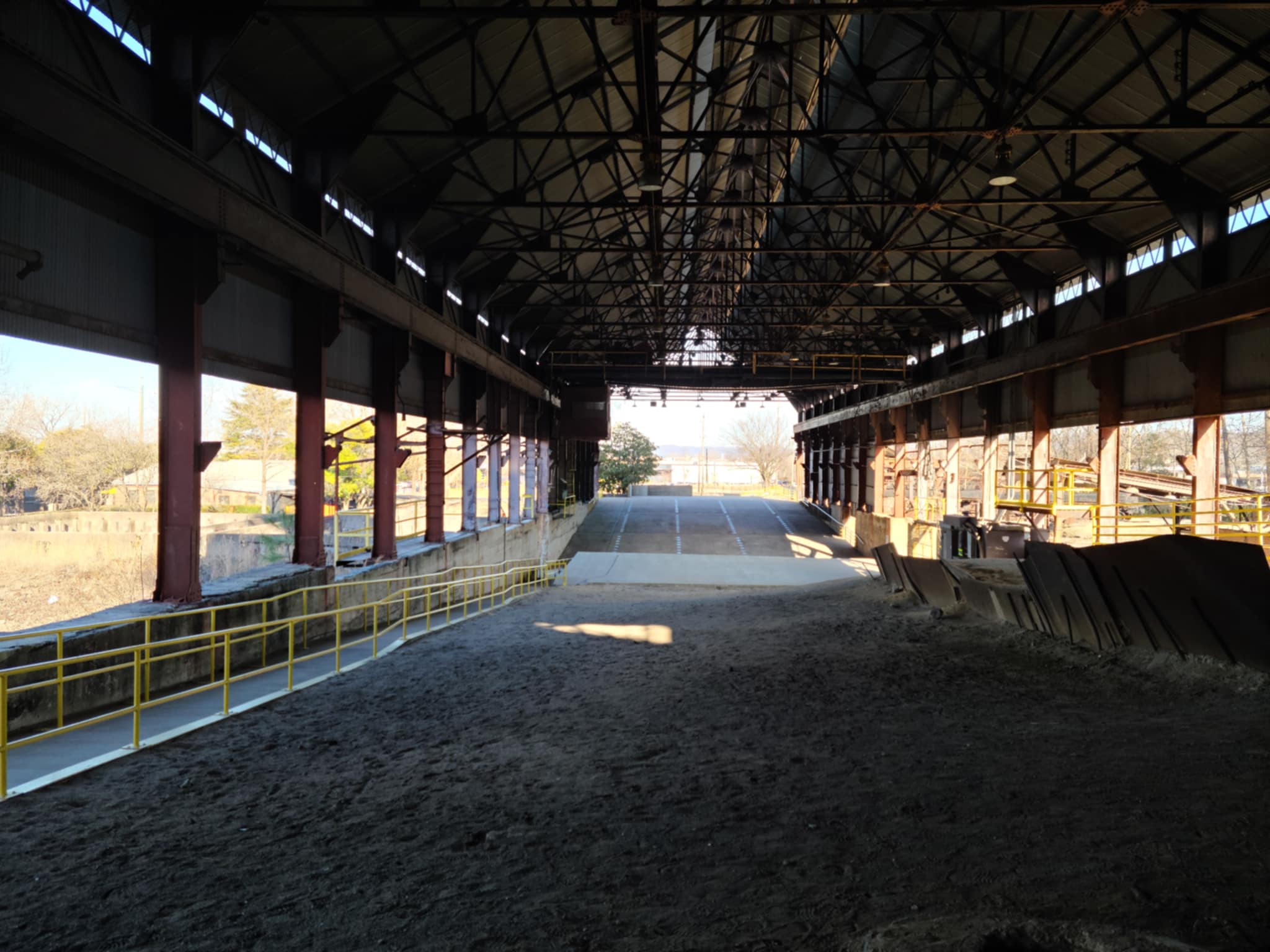
From the nearby highway, Sloss appears fairly small, at least in comparison to the sprawling, hulking complexes Bryan was used to seeing along the banks of the Ohio River growing up. The two furnaces and associated other buildings only cover about fifteen acres, squeezed between the still-operational railroad line that first served the furnaces and other modern development. Appearances can be deceiving, however, and when on the ground staring up at the towering furnaces and labyrinth of metal, it’s hard not to feel small oneself. Our guided tour took us directly into the belly of the iron beast in a way none of us had ever really experienced before. From feeling the damp cool in the bowels of the tram lines bringing fresh coal to the furnace elevator to appreciating firsthand how close the workers would have been to molten iron on the pouring room floor, Sloss brought home not only its power of place but a greater, more intimate understanding of the intricacies and perils of the industrial iron production that formed such an important part of regional and indeed national history.
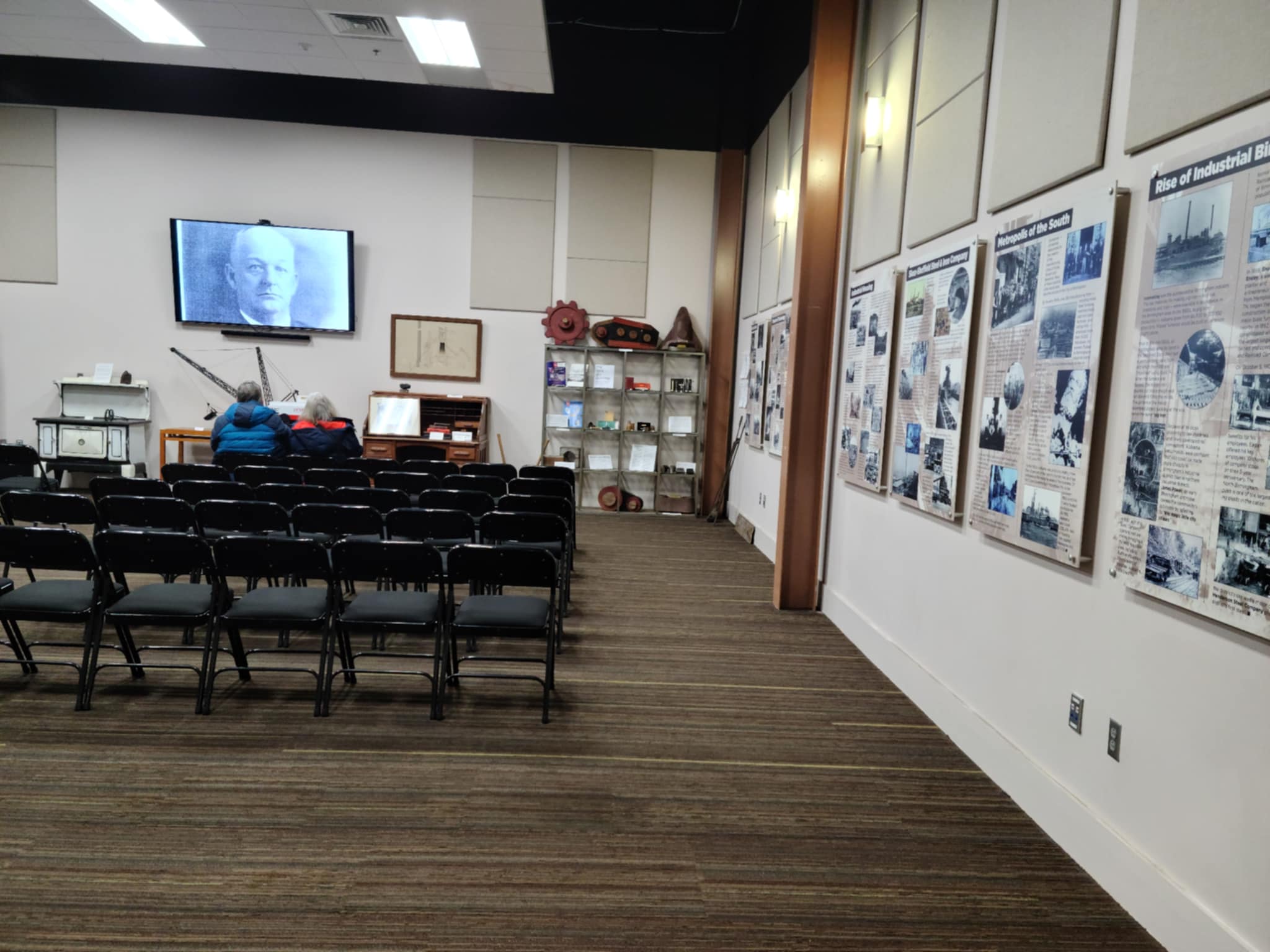
That is not to say that we were uniformly dazzled by our afternoon at Sloss, though. Unlike other historical sites that attempt to ensure that the full story of their site is available to all visitors, paying or unpaying, through multiple media, it felt like the design of Sloss was afraid of interpretive redundancy. On the one hand, perhaps understandably, our tour of the grounds focused more on the facts of the industry that took place there than any larger history. On the other, Sloss’s brief interior museum—really more of a single room with a television and some models and photographs around its walls—did a great job explaining the overarching history of the site and its relationship with the Birmingham area, but contained none of the information regarding iron production that our tour guide related in engaging detail. Only if you paid the extra fee for that guided tour would you receive both the macro and micro history of the foundry. On a procedural note, we also wish that tour had been organized differently. It may have led to more walking (not necessarily unwelcome in the surprisingly chilly shadows of an iron plant in late January, even in balmy Deep South winter weather), but we would have much preferred prioritizing learning about Sloss in the order that iron production would have flowed rather than the most efficient route through the complex. It was not particularly difficult to re-organize our disparate stops and information back into working order in our heads, but we couldn’t help but feel that a more organic presentation would have heightened the experience even further.
It is rare for any site to be perfectly interpreted, however, and the efforts on display at Sloss were more than enough for us to be quite happy with the unique history in which we had been immersed. America does not have all that many sites dedicated to exploring the fraught history of the final decades of the 19th century, and now that we are largely moving into a post-industrial society, the lived reality of these massive temples of industry and unrestrained capitalism may be more important than ever to understand and learn from—especially given the move of certain political agents back towards a world of robber barons and oppressed, legally unprotected workers. If you ever find yourself in Birmingham, then, Sloss is well worth an afternoon’s detour.