As an historian who also quite enjoys playing games of both video and tabletop variety, I naturally often find myself reflecting on the historical accuracy of these media. I’ve written before about how the experience of command in strategy games is much more omniscient than it ever has been in reality as well as how some efforts to ensure games do not become “atrocity simulators” have, in my opinion, actually resulted in a far more concerning approach of essentially erasing those atrocities from the history a game depicts. As I’ve made my way through my most recent grand strategy endeavor, I’ve been noticing another element of ‘gamification’ that feels jarring in relation to how things actually work: the lack of any meaningful variety in local, provincial governance that doesn’t come from the agency of the player.
It is no coincidence that I’ve been dwelling on this topic during this particular game; Victoria 3, one of the newer installments in the suite of complex, globe-spanning grand strategy simulations from Swedish studio Paradox, is set between 1836 and 1936, right in the middle of my own historical specialty. What’s more, I decided uncharacteristically not to play as Great Britain for this first run, but to try out a country that I’ve rarely gotten a chance to play despite it being so familiar personally: the United States of America. Enticed by the prospect of interacting not only with westward expansion, the sectional debate over slavery, and Civil War and the ensuing Reconstruction but also the Gilded Age, labor relations, step onto the world stage, and possibly even the Great War (or a conflict like it), I was eager to see just how exceptional I could make America within the space of a century.
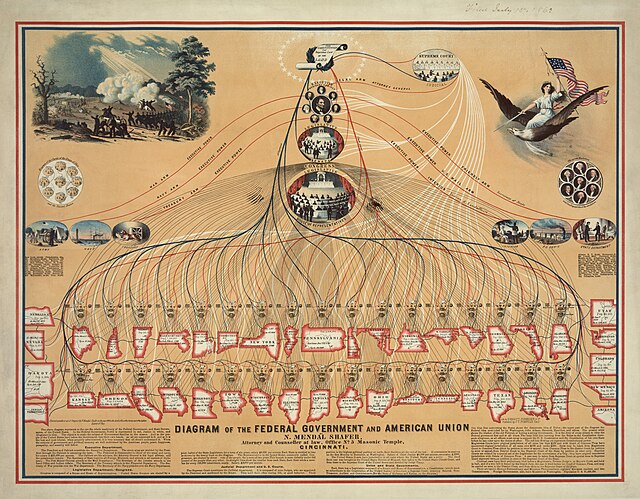
Immediately as I logged in, however, I noticed some rather odd decisions in how my home country had been represented in-game. In Victoria 3, one of the key mechanics of the game is the “laws” that governs how each country behaves. These laws are split up into 23 individual categories which can each have only a single law active, themselves split up into three larger groups: power structure, economy, and human rights. These laws do everything from tweaking the modifiers on trade or construction to changing how your country’s population groups interact with the economy to even the ways in which your government is constituted and thus how you play the game itself. They can be changed, but often must go through the legislative process to do so and be subject to the support and resistance of interest groups inside and outside the government. As with any adaptation, there are of course some elisions and inaccuracies. To take just one example, the difference between a Parliamentary Republic and a Presidential Republic is essentially one of modifier values, and both operate like a parliamentary republic in their electoral mechanics—which means that there is never any possibility of the President’s party not controlling Congress in-game. The bigger problem for me, though, is that these laws exist only at the national level. Yet for many issues, power to legislate rests not with the Federal government of the United States but with the states themselves. Perhaps it’s unsurprising that developers from a European company might not appreciate these differences, but it profoundly impacts the portrayal, and thus the behavior of this virtual manifestation of the United States. The most egregious example in Victoria 3 is likely that of education; America begins the game with “Public Schools” as its educational law, and this then applies to every state in the Union. Yet educational policy has always been a state decision, and indeed in the antebellum period the Southern states were notorious for having no real educational system to speak of, outside expensive private academies for the children of the planter elite. Rural areas throughout the country also relied more on informal religious schooling (when not simply teaching children at home) than any formal system of publicly-funded institutions. Both of these are actually options for educational systems in Victoria 3 as well (listed as “Private Schools” and “Religious Schools”), but are themselves an all-or-nothing condition. It is essentially impossible to faithfully recreate the reality of American education in 1836 or indeed any era.
But for all that, I can’t actually think of any better way to reflect the United States’ unique form of government in this or any other game that includes the possibility of playing as other polities. While the developers did ensure that each of the modern fifty states is exactly one state in-game, “states” in Victoria 3 are simply an organizational division of the globe; they do not have any kind of autonomous governance or behavior that could take on the role of legislating local conditions. This is not an issue confined to this one game or even Paradox games in general, either; the closest any strategy game gets to one’s own forces or administration seeking initiative from the ground up are systems of “loyalty” wherein governors appointed by the player may pursue their own agenda and ultimately rebel if left unaddressed. More often, though, province “autonomy” is just a series of numbers, either climbing or slowly falling towards religious conversion, cultural assimilation, or of course rebellion. It’s not nothing, but it’s a far cry from having to manage fifty separate electoral constituencies all actively pursuing their own agendas, and some of them instituting policies that are contrary to your own designs and even purely harmful to themselves. But let’s say, just for a moment, that Paradox was able to accurately adapt the United States Federal system for Victoria 3. No other country in the game would function this way, and players would essentially need to learn an entirely new game every time they chose America for their first time. Extend the scenario out to every country and it would be utterly demoralizing, not only for players who always had to start over but for developers, who would need to put in inconceivable amounts of time and resources to tailor every possible polity to exactly its most accurate representation. Such a game would never even reach publication.
We have here, then, yet another reminder of how the most popular, engaging historical games are (or at least should be) always games first and clothed with the trappings of history second. Anyone looking for serious historical insights through such pastimes must be careful, and indeed likely look more for teaching moments like these when an inaccuracy or misconception can be examined rather than a game teaching an actual lesson itself.