by Bryan & Heather
These days, Victorian and Edwardian period pieces are a dime a dozen. Throw in a bunch of suits and at least vaguely era fashion, organized crime or a suitable substitute, endless scheming, overwrought familial and romantic drama, and you have the formula for any number of shows, for most of which we’ll at least try the pilot. There always has to be some manner of unique hook, however, and we recently saw one cross our Netflix dashboard that promised one more unique than most: beer. The iconic, internationally famous Guinness Stout, to be precise. Heather had actually visited the famous brewery, once the largest in the world, while on a trip to Ireland during college, and seeing at least a little bit of the story behind a now-ubiquitous product alongside the usual 19th-century drama appealed to our documentary-loving side, as well. What we were not expecting was something so delightfully entertaining, if perhaps light on interpersonal historical accuracy.
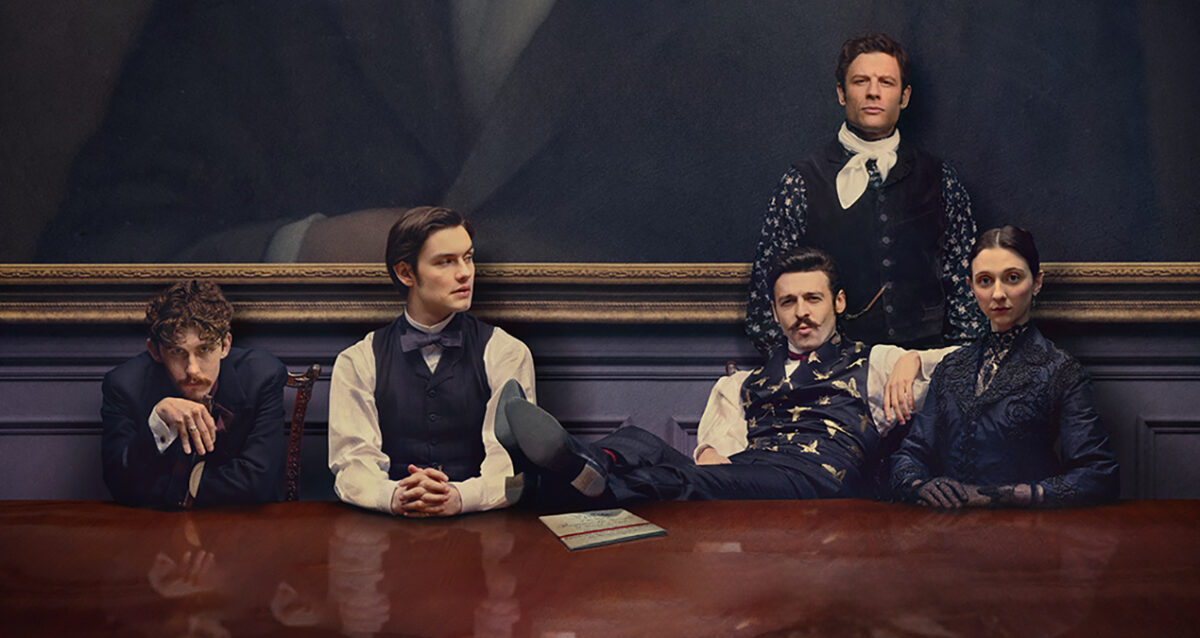
From creator of period piece titan Peaky Blinders Steven Knight, House of Guinness opens with the funeral of Sir Benjamin Guinness in 1868. A scion of protestant Irish nobility, Guinness had catapulted his family’s brewery in St. James’ Gate, Dublin to new heights over the three decades of his management, and upon his death the brewery was indeed the largest in the world, and he the wealthiest man in Ireland. It would be up to his four children—sons Arthur, Benjamin II, and Edward and daughter Anne—to preserve that legacy and expand upon it, seeking new markets for the “black stuff” and cement the family’s place as leaders and powerbrokers in British Ireland. This is just the sort of dynastic, Machiavellian, scrambling-for-inheritance setting that modern “dark” historical storytelling thrives upon, and yet to our surprise there was very little lasting animosity or betrayal among the Guinness siblings as the show progressed. Instead, House of Guinness focuses more on the individual journeys and development of each one of the siblings as they find their way towards love, personal fulfilment, and escaping the shadow of their father.
The larger historical backdrop against which these personal stories are set is, gratifyingly, quite faithful to the record we have of the historical Guinnesses. There are no invented siblings or character amalgamations (though there is an invented foreman/consigliere-type figure in the character of Sean Rafferty), and both the development of the brewery itself and the political and social initiatives of the family are right out of the history books, from the expansion into the American market to Arthur’s rocky early political career to Edward’s drive to build affordable housing for Dublin’s poor. The inclusion of the Fenian movement for Irish independence also adds a nice foil for the Protestant, (mostly) Unionist Guinnesses, particularly as not many period pieces covering pre-20th century Irish nationalist movements reach America, let alone ones that involve trans-Atlantic connections to similar movements in the United States. There are some nice inclusions socially, as well; two of the three Guinness weddings that occur throughout the course of this first season are marriages for something other than romantic love, and yet unlike in so many other modern stories, these are not portrayed as suffocating or repressive but rather mutually beneficial, even healthy and friendly, relationships, as many such marriages were. The inclusion of Dublin’s LGBT subculture through the character of Arthur was also welcome, though we wished it had been portrayed with more of the contemporary expressions of that community rather than feeling more like the modern community transplanted a century and a half backwards.
The problem for those with at least passing interest in history, however, is that while the context and window-dressing of House of Guinness is very good, the bulk of its character-driven storylines are complete fictions. In the show, Arthur struggles with expressing himself and living a fulfilling life in a society that is overwhelmingly, violently homophobic; there is not even a hint of evidence that the historical Arthur Guinness was gay. Similarly, his younger brother Benjamin struggles with alcoholism in his minor recurring role; again, nothing suggests this was the case in real life (though of course this isn’t necessarily implausible, given the time and British culture). Taking such historical liberties with the lives of real people is regrettable and for some may even verge on a lack of respect. Using fictional character inserts of course brings other, different problems of accuracy, but avoids any such conundrum—plus, inventing so much history seems to implicitly argue that there really wasn’t enough interesting material about the Guinness family to make a show about in the first place.
Separate from our historical sensibilities, however, we couldn’t help but thoroughly enjoy what House of Guinness had to offer. With just the right mix of tension, conflict, romance, and redemption, Knight has brought yet another British working class city to life on screen, this time from the top down. It remains to be seen whether a second season will come to resolve the first’s cliffhanger ending, but if ti does, we’ll certainly be there to watch.