by Bryan & Heather
Alabama is home to rich layers of history, much of which, unfortunately, is not entirely uplifting. It’s become a tradition of ours to pick one of those kinds of sites to visit on the weekend closest to Independence Day as an exercise in mindfulness, balancing out positive patriotism with necessary somber reflection on how our country has often failed to meet its lofty ideals. This year, we realized that we’d been overlooking a major landmark in (relatively) our own backyard for years: Tuskegee Airmen National Historic Site. Clearly, we couldn’t let another year pass without visiting the birthplace of one of the most famous military units in American history.
A little less than two hours southeast of Birmingham lies Tuskegee, home of Booker T. Washington’s famous Tuskegee Institute (still in operation, though now known as Tuskegee University). By the middle of the twentieth century, Tuskegee offered a myriad of technical and professional training courses for its black students, including a civilian pilot training program out of its Moton Airfield north of town. Soon after the United States entered the Second World War in 1941, the Institute began contracting with the Army to support the war effort by providing something the nation had never seen before: black fighter pilots. Candidates would go through basic flight school at Moton and then, if they passed, attend advanced military flight school at the nearby Tuskegee Army Airbase. Though the armed forces were racially segregated at the time—and would remain so until 1948—these pilots would form their own, all-black 99th Pursuit Squadron and, eventually, an all black fighter group, the 332nd. Known as the Tuskegee Airmen or Redtails, after painting the tails of the P-51 Mustangs they received in 1944 bright red, these aviators proved some of the most skilled, effective pilots of the war and, along with other black units like the Hellcats, conclusively demonstrated that segregation in the military was without foundation.
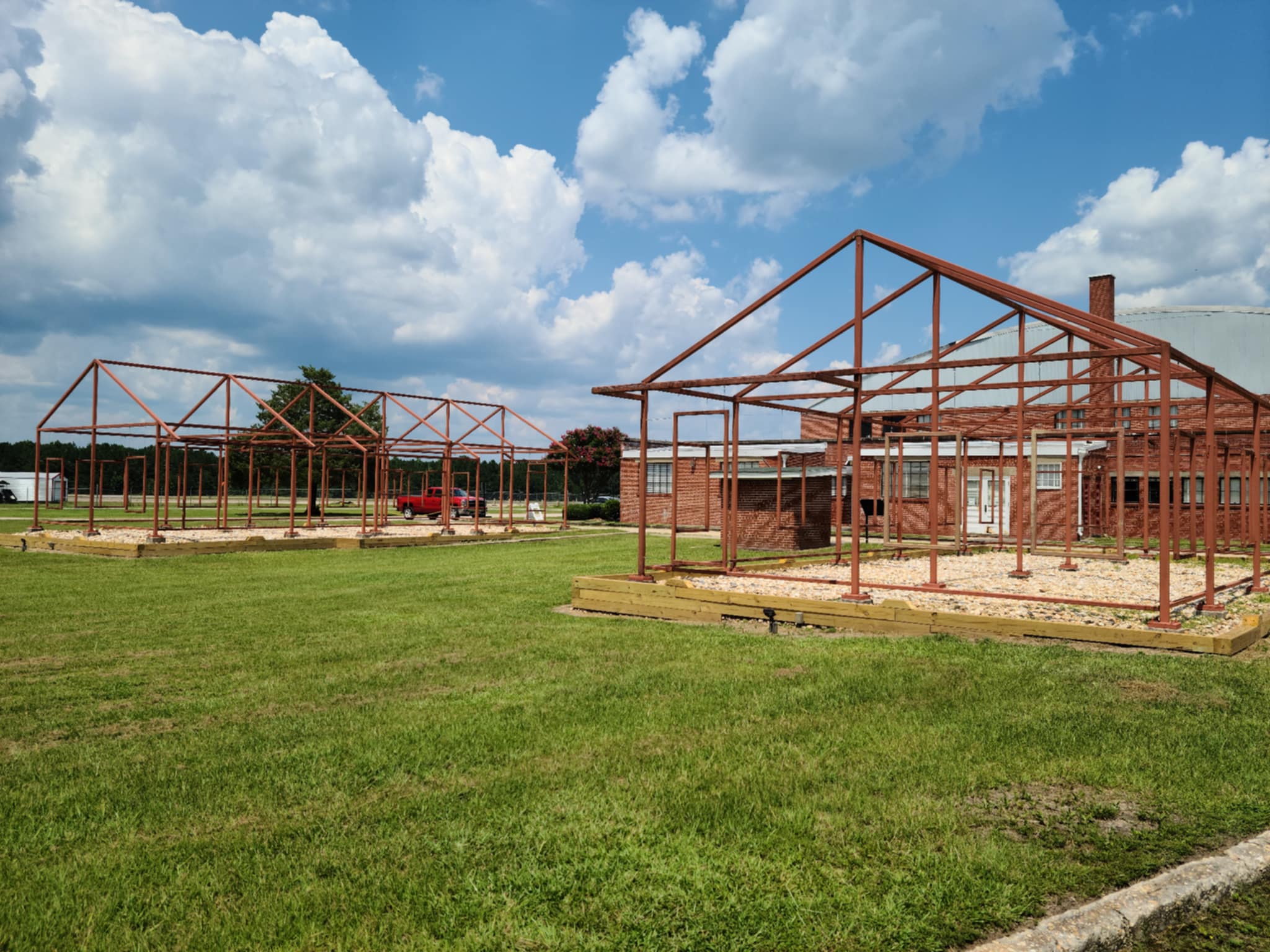
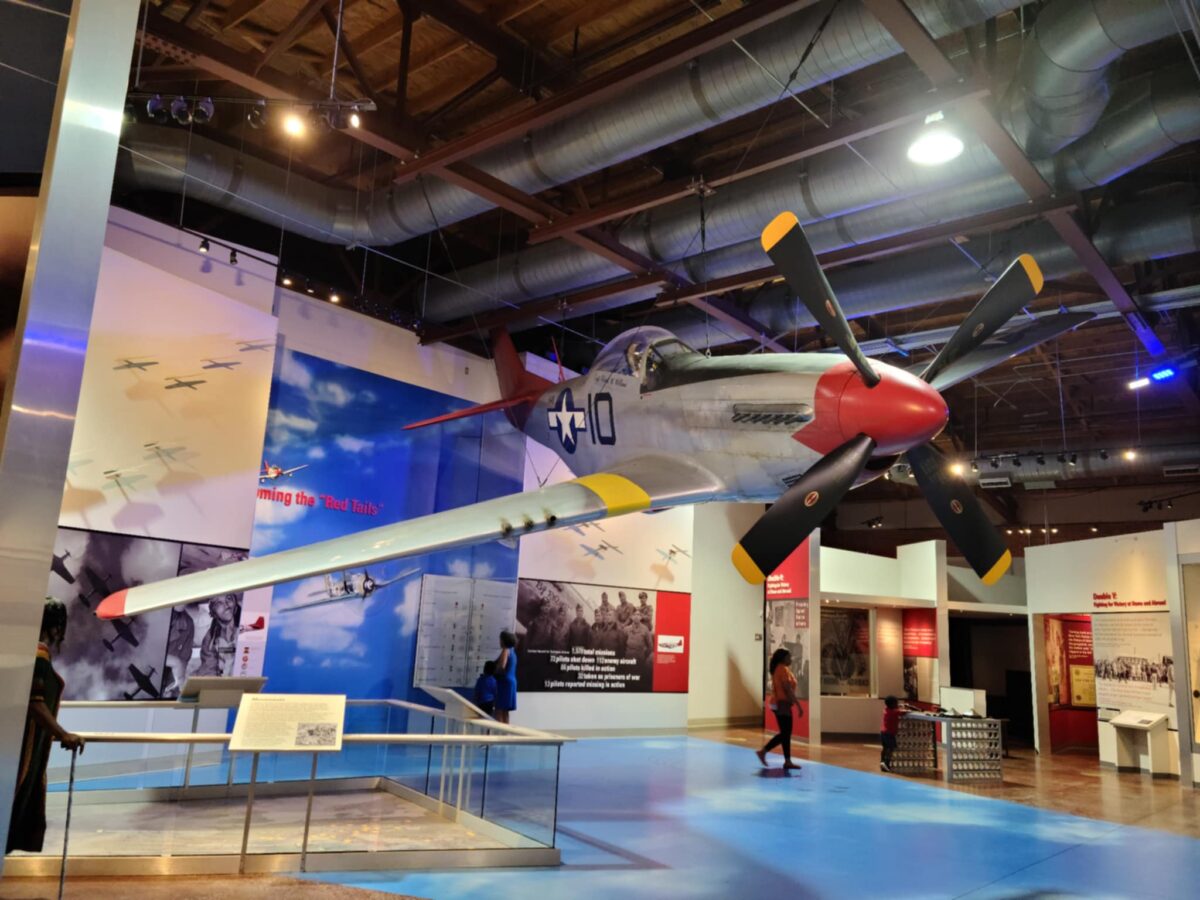
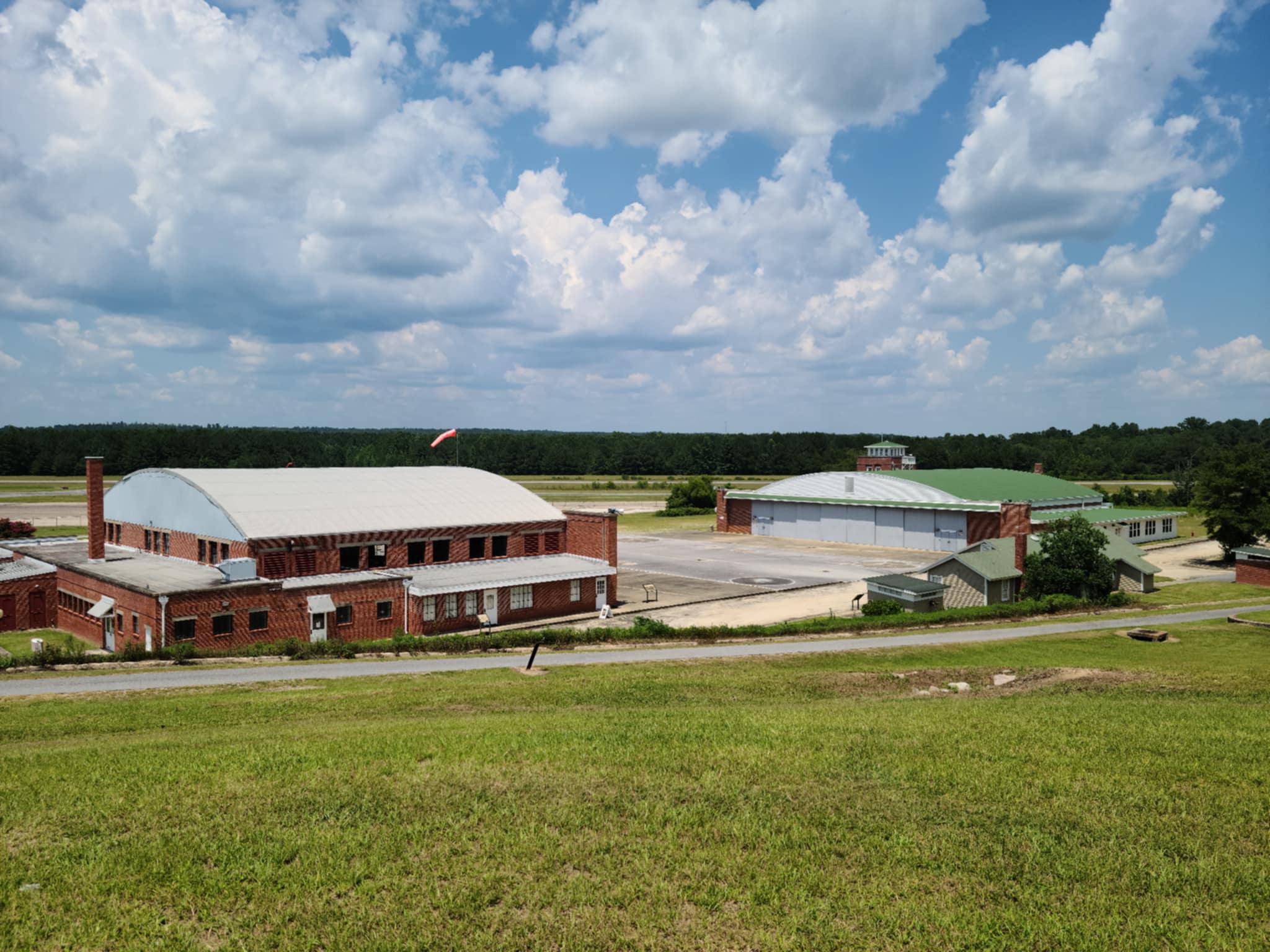
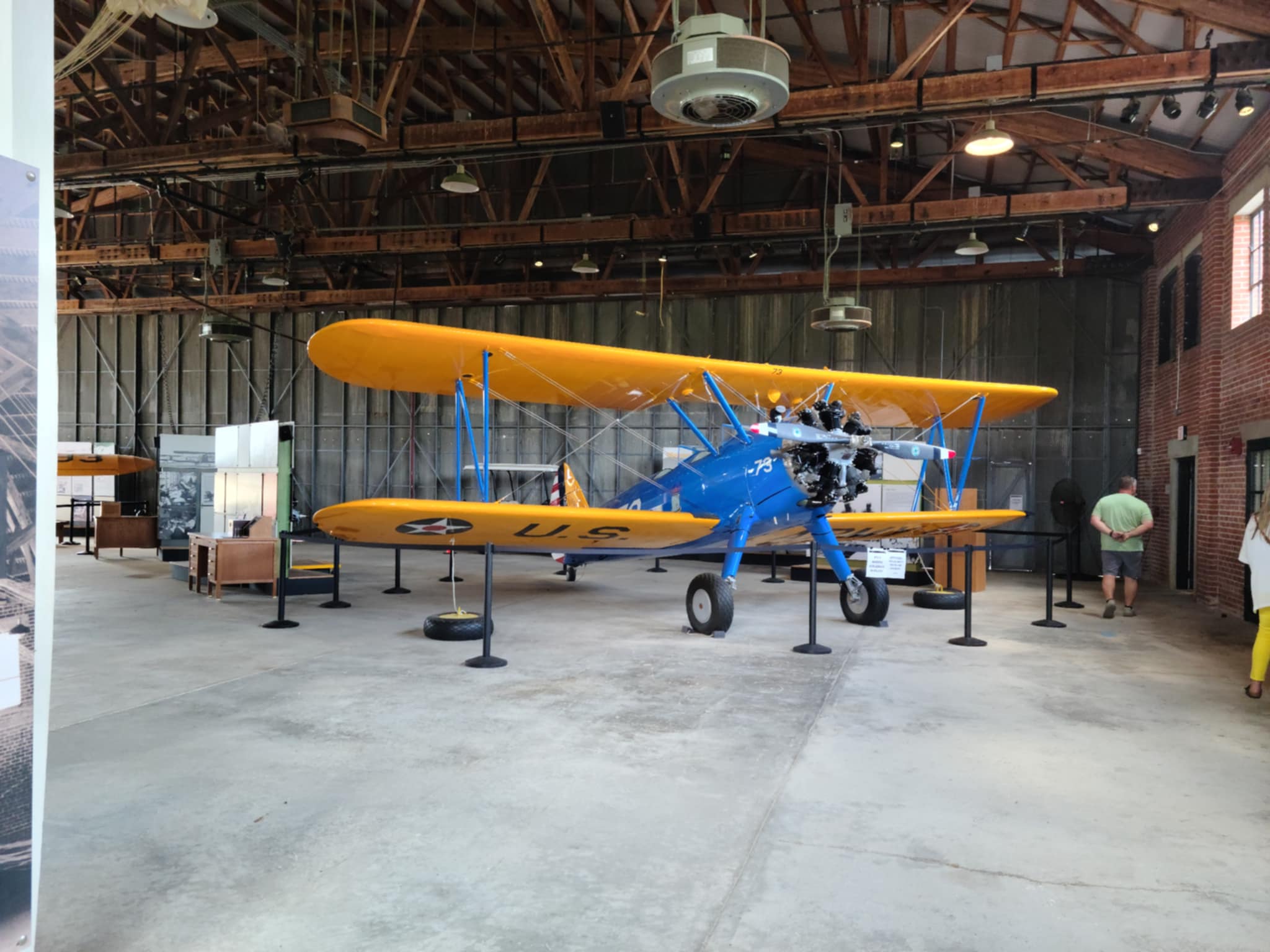
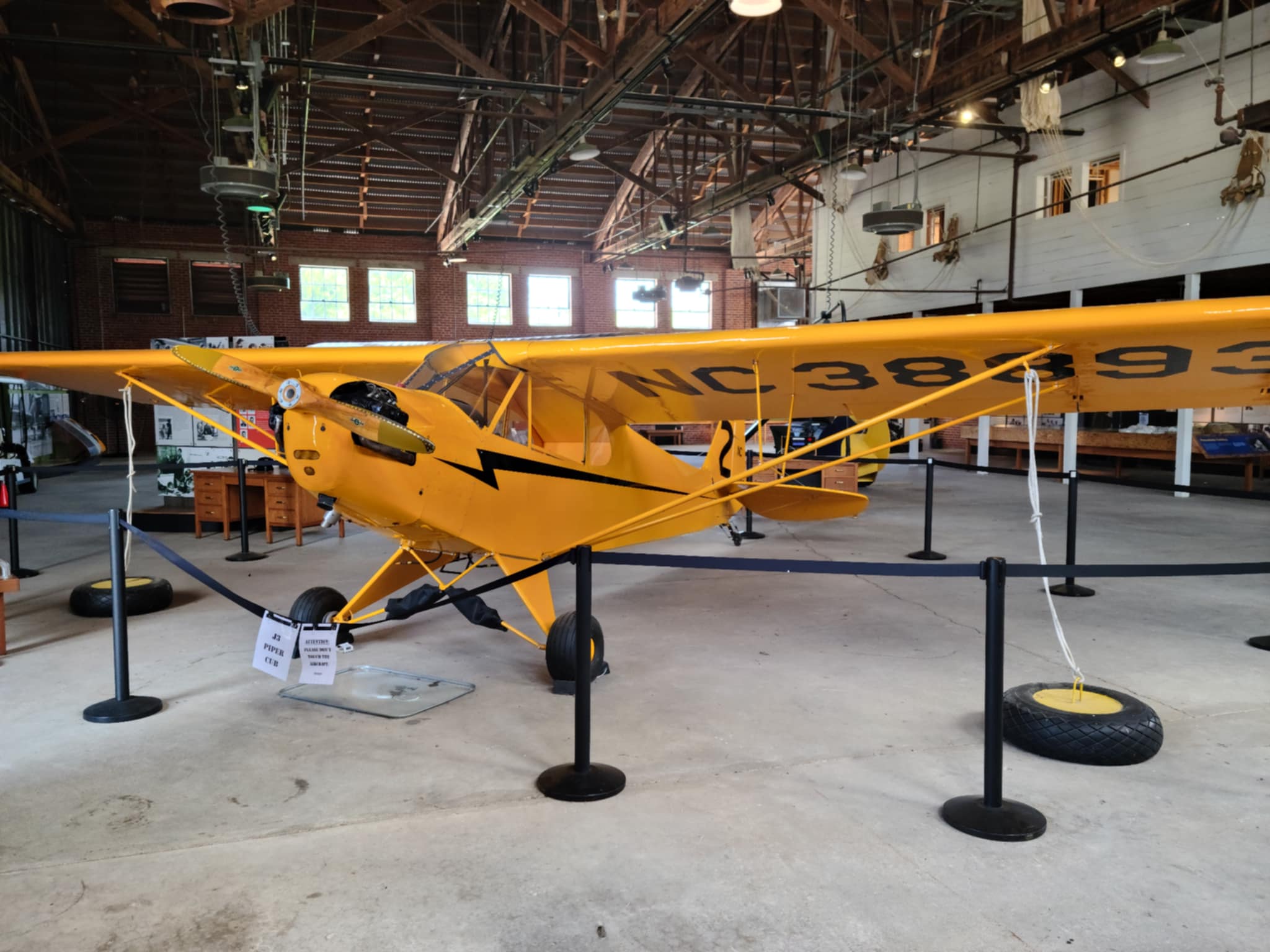
Today, Tuskegee Airmen National Historic Site comprises the buildings of the old Moton Airfield. The focus of the site is the two large hangars, one of which (Hangar 1) is original and the other (Hangar 2) a reconstruction after a fire in the 1980s. Other peripheral buildings also remain, and those that don’t have been reconstructed using the empty frame method we first encountered at Old Cahawba on this same yearly trip two years ago. Hangar 1 houses museum exhibits interpreting the personnel, equipment, and operations at Moton’s basic flight school during the war, and we were thrilled to not only see an example of each model of biplane training craft used there but also a primitive flight simulator and even an interactive parachute folding station! The emphasis on all base personnel, from instructors and cadets down to intelligence officers, doctors, mechanics, and even cooks and laundresses, as integral parts of the Tuskegee Airmen was not only refreshing but a necessary restoration of the logistical context required for any military unit or operation to work. Hangar 2’s museum played host to the site’s fantastic introductory film, which plays across three linked screens and (some cheesy computer-generated graphics notwithstanding) numbers among some of the best we’ve seen from the NPS. Its exhibits grapple with both the actual war service of the Redtails and the racism they faced at home in Alabama, on other bases across the country, and during their service in Europe—all presided over by a P-51 brilliantly suspended from the ceiling. We found the former two the most intriguing, evolving standard tropes of the Jim Crow into something even more jarring and sinister; one oral history recording details how cadets could not safely venture into the town of Tuskegee to shop, and one (in uniform!) was assumed to have stolen the plane he was working on.
For all these highlights, though, we can’t quite say we were impressed by Tuskegee. As we proceeded through its interpretation, we couldn’t help but notice that what context was provided to visitors seemed somewhat uneven. The actual working of Moton field was well-covered (perhaps too well; Hangar 1 contains biographies of so many individual officers it seems like space was sacrificed that could have been used to cover other history), yet basic topics like the coming of the Second World War and even the history of the Tuskegee Institute were glossed over if they appeared at all. The choice (necessity?) of locating the introductory film in the second hangar was also regrettable; we strongly feel that those films should form visitors’ first experience with a site whenever possible, both to help them put together everything they subsequently see and because it will be the only feature some visitors will ever see! Tuskegee’s use of space was also less than ideal. As is becoming a perennial note of ours, some exhibit spaces were laid out less-than-intuitively, but much more importantly, we didn’t feel the level of “power of place” we really felt we should have. Here we were, on one of the actual airfields used to train the vaunted Redtails, but most of our time was spent in museums that could have existed anywhere in the country and the other buildings aside from the hangars were not available to tour. What’s more, from what our online research indicates, the site doesn’t even host any aerial displays throughout the year, despite Moton still operating as an airfield!
As Tuskegee faded into our rearview mirror as we headed back north towards home, we found ourselves in an ironic mirror of our trip to Horseshoe Bend a year previous. Then, we hadn’t expected much from a small site deep in rural Alabama and had been blown away by what we’d encountered. Now, we had expected an interpretive landmark for a widely-known element of American history and, while still definitely enjoying ourselves, had been underwhelmed in certain key ways. Tuskegee Airmen National Historic Site is still well worth stopping into on the off chance that you ever find yourself passing through Tuskegee, but do so with expectations appropriately calibrated.