by Bryan & Heather
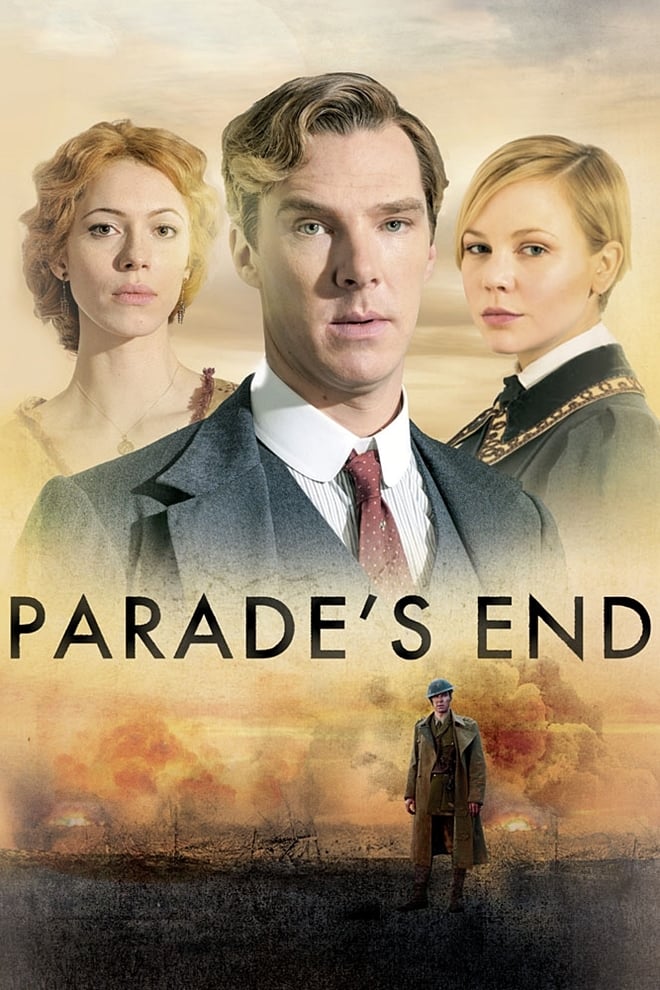
Our studies under Dr. Ian Isherwood during undergrad, not to mention Bryan’s own specialization in the British Empire, has led us into a somewhat higher than average awareness of materials related to the First World War. One of those (that actually first aired in fall of 2012, during Bryan’s first semester with Isherwood as a professor) that we’ve never gotten around to watching was Parade’s End, a BBC miniseries starring Benedict Cumberbatch and Rebecca Hall. When we saw it on Max, it certainly looked every inch the kind of prestige period drama we generally enjoy, and at only five episodes, why not give it a shot? Upon finally finishing, however, we both turned to look at each other with bemusement and, near-simultaneously, asked,
“What the hell was that?”
Based on a series of novels written by Ford Madox Ford of the same name, Parade’s End follows the convoluted life of Christopher Tiejtens (Cumberbatch), the second son of an English lord employed as a statistician for the British government. As the result of an impromptu steamy encounter on a train, Tietjens is married to a vain, selfish socialite and serial adulteress named Sylvia (Hall) who cares little for their son and less for him (she also happens to be Catholic). Unlike so many others of his class in his position, however, Tietjens refuses to divorce Sylvia, take his own lovers, or even utter an unkind word to her in private, instead maintaining a dutiful forbearance for the sake of his son and his own sense of honor. That worldview starts to crack when he meets Valentine Wannop, a young girls’ school teacher and suffragette who connects with Tietjens both intellectually and emotionally in ways neither ever thought possible. As the world they knew becomes increasingly imperiled and unmoored with the outbreak of the Great War, Tietjens chooses to serve his country in Flanders, leaving the pacifist Wannop to oppose the war even further while pining for his safe return. Ultimately, a serious wound just prior to the end of the war brings Tietjens home, and a final confrontation with Sylvia leads to his and Wannop’s decision to finally consummate their relationship and live together, society, honor, and Sylvia be damned.
In broad strokes like that, Parade’s End almost makes sense; we assure you, the lived experience of watching it is not nearly so clean. As one might expect when adapting four novels into only five hours of television (one hour and fifteen minutes per book, for those keeping track), the narrative careens from plot point to plot point, barely giving enough time for developments and character arcs to breathe and feel earned. Seldom have we encountered a piece of media that tells, rather than shows, more than this one, and the narrative’s reliance on rumor and misunderstandings further left us doubting whether any given character was telling the truth, misconstruing something the audience witnessed the reality of, or fabricating something wholesale. Indeed, for the first four episodes, Sylvia seems almost to be a sympathetic character, a vibrant woman unapologetic about her sexuality that finds herself repressed by her society’s expectations and scorned by her husband’s refusal to even get angry about her infidelities; only with her desecration of a Tietjens family heirloom and charade of being terminally ill in the final episode is the truth of her malice finally confirmed.
Historically speaking, we thought we could detect a number of major and minor themes and commentaries on the period that drove the narrative, but with a similar lack of development that robbed us of any certainty. In what could be commentary on the less-than-democratic policies of the government during wartime, Sylvia’s family priest, an Irishman, is arrested for subversive activity and executed without trial—but it’s never clear if he was actually guilty of anything. Tietjens’ own upright behavior amidst the decadence and scandal of other members of his own class even before the war seemed to be some kind of rejection of the First World War as the end of a better age, indicating that the age had been immoral and decadent, but that’s equally unclear; Tietjens could easily be seen as feckless and narcissistic himself. The resolution of the show, with Tietjens and Wannop entertaining his surviving comrades from the trenches while shunning (and being shunned in turn) their pre-war friends across the street felt like another instance of that perennial theme of finding a simpler, yet more honest and fulfilling sense of belonging and love during war that reveals home society to be fake and meaningless—but we only get to see Tietjens at the front for a fraction of that one episode, hardly enough to really develop that point.
Ironically, then, we came away from Parade’s End with feelings similar to those the Tietjens’ company of veterans might (or might not) have felt: it was a visually gorgeous piece of television with wonderful performances that ultimately felt like just an empty shell with nothing compelling to say. We hear from Dr. Isherwood, appropriately enough, that the novels themselves are terrific and poorly adapted here, though at this time neither of us can corroborate that. Bryan may eventually get around to reading them out of curiosity, but in the meantime, we are quite comfortable in saying that Parade’s End is a show even First World War enthusiasts can safely skip.