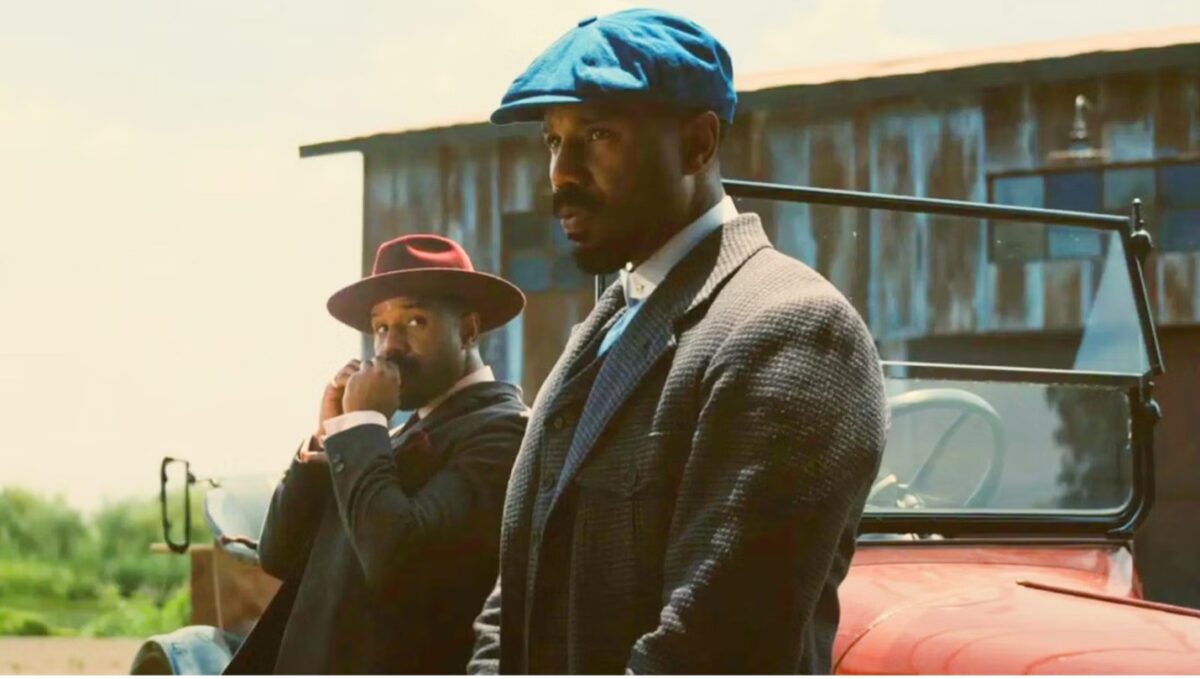
What can be said of Ryan Coogler’s 2025 horror film that has not yet been discussed? While at its core Sinners is another vampire flick, the way it utilizes the genre to tell a culturally and historically impactful story sets it apart in a sea of similar films. Set in Clarksdale, Mississippi during 1932, Sinners takes a typical vampire story and layers it with racial themes, specifically in relation to Black culture, history, and the origins of the Blues. Coogler’s choice of setting further speaks to these themes, as Clarksdale, Mississippi is referred to as the birthplace of the Blues. Sinners is a refreshing addition to the vampire genre that calls back to long-standing literary themes involving cultural influence and invasion of the ‘other’ that are often absent from modern vampire-related media, and pays respect to its cultural and historical influences in many different forms, ranging from the film’s soundtrack to infusing characters, props, and set design with visual symbolism that enrich the film’s story. However, for all the facets of meaning woven into Coogler’s vampire film, how does it hold up with respect to historical representation, particularly within the context of its costumes?
The 1930’s were a decade largely defined by the Great Depression, which began with the stock market crash in late 1929. As a result of the crash, clothing of the era (particularly in the earlier years) was mostly carried over from the 1920s, with the exception of the higher-class minority who remained relatively untouched by the financial devastation this era saw. Interestingly, the 1930’s were also a decade that saw a number of innovations within both the fashion and entertainment industries, which became inextricably linked during this time. Similarly to women’s fashion, menswear took its inspiration from Hollywood celebrities such as Fred Estaire, Cary Grant, and Gary Cooper, who in turn had adopted the London Drape suit from the Prince of Wales. Men’s jackets during this era were shorter to save on fabric costs, and pants were mostly straight-cut with a wider, fuller fitting leg coming out of the 1920s, but later in the 30’s became more tapered at the ankle and often included cuffs.
Given that the majority of people in the early 1930s were repurposing older clothing from the previous decade, it is a fitting choice that the “Smoke Stack” twins in Sinners are dressed in clothing which is more evocative of the 1920s than 30s. This choice made by the film’s costume designer speaks volumes as to the twins’ backstory, while still maintaining their sense of individuality. The younger of the twins, “Stack”, is dressed in a well-tailored suit made from more expensive fabrics, adorned with accessories and a red hat. In contrast, Stack’s older brother “Smoke” is dressed in a far more utilitarian manner, which is indicative of his grounded character and military history. At the beginning of the film, these two characters are returning from a life in Chicago that is a far cry from their roots in Clarksdale, however while one uses clothing to further distance himself from these roots, the other dresses in a manner which is more accepting of them. The choice to essentially ‘colour code’ the twins is an interesting one as well – blues and cool greys are used for Smoke’s clothing, while reds and warmer shades of grey are used for Stack’s attire. Colour is an essential tool for storytelling and conveying information about a film’s characters, and the implications of blue and red speak to Smoke’s grounded, calm, and stoic personality, while red speaks to Stack’s passionate and bold nature. In terms of art history and religious symbolism (of which there are plenty other examples in this film), blue is often associated with the Virgin Mary, and is therefore considered to be a colour that represents purity, while red is the colour of desire and sin.
So why does this matter beyond the context of visual storytelling in a film? Historically speaking, clothing has been (and still is) an essential form of expression, whether it be to convey political, religious, and social ideologies, or simply for creative expression and assertion of individuality. This is a notion that can be traced back through history, whether in reference to the Sans-Culottes of the French Revolution, ermine-embellished purple capes worn by royalty, the implications regarding one’s character through blue vs green clothing in womenswear during the medieval and renaissance eras, the manufacturing and wearing of Kente cloth garments, or even something as simple as a favourite band or sports t-shirt in the modern day. Clothing has also been a means to convey deeper meaning within visual arts in the form of allegory and satire as well, an example of which is a famous portrait of Queen Elizabeth I, who wears a dress that is printed with eyes and ears to convey the idea that the queen’s servants remain ever vigilant (this is a topic of debate, but still interesting to note regardless). This use of clothing is closest to what we see in costume design for film productions, and is certainly present in Sinners, as discussed.
While more removed from the discussion of costume design, the analysis of clothing can be used for other purposes as well, such as within the context of material culture. Through the study of clothing, one can gain insight into many different aspects of society, culture, and industry. For example, a silk scarf from the Victorian era might provide information about the owner regarding their personal preferences, social standing, and fashion trends which may have been significant during the time it was made, but might also offer information regarding the manufacturing process of the scarf itself such as textile processing and production, the use and availability of various dye colours, and distribution channels based on tracking the various owners of the scarf in question. Given this information then, it is clear that clothing is, indeed, never ‘just’ clothing, but is a vehicle through which people tell their personal stories, which makes it a significant tool for telling stories onscreen as well. The practice of using clothing as a representation of the self is one that continues today, both in the real world and in our various forms of media, and as such, the discussion of historical accuracy of on-screen depictions such as Ryan Coogler’s Sinners is very much worth having.