by Bryan & Heather
The past decade has seen us remember and reawaken our childhood fascination with paleontology. The resurgence of the Jurassic Park franchise, along with such groundbreaking docuseries as Prehistoric Planet and Life on Our Planet have fueled our interest—and it doesn’t hurt that our cat Indy seems entranced by CGI dinosaurs, either. When planning out our driving route to Austin, TX for Bryan’s brother’s wedding celebration in October of 2024, then, an innocuous pin on Google Maps caught his eye: Waco Mammoth National Monument. We resolved to stop in if we had time, thinking it would offer a great opportunity to add another break to our nearly twelve hour-long drive. We duly pulled into the parking lot on a beautiful Sunday morning, and couldn’t be happier that we did.
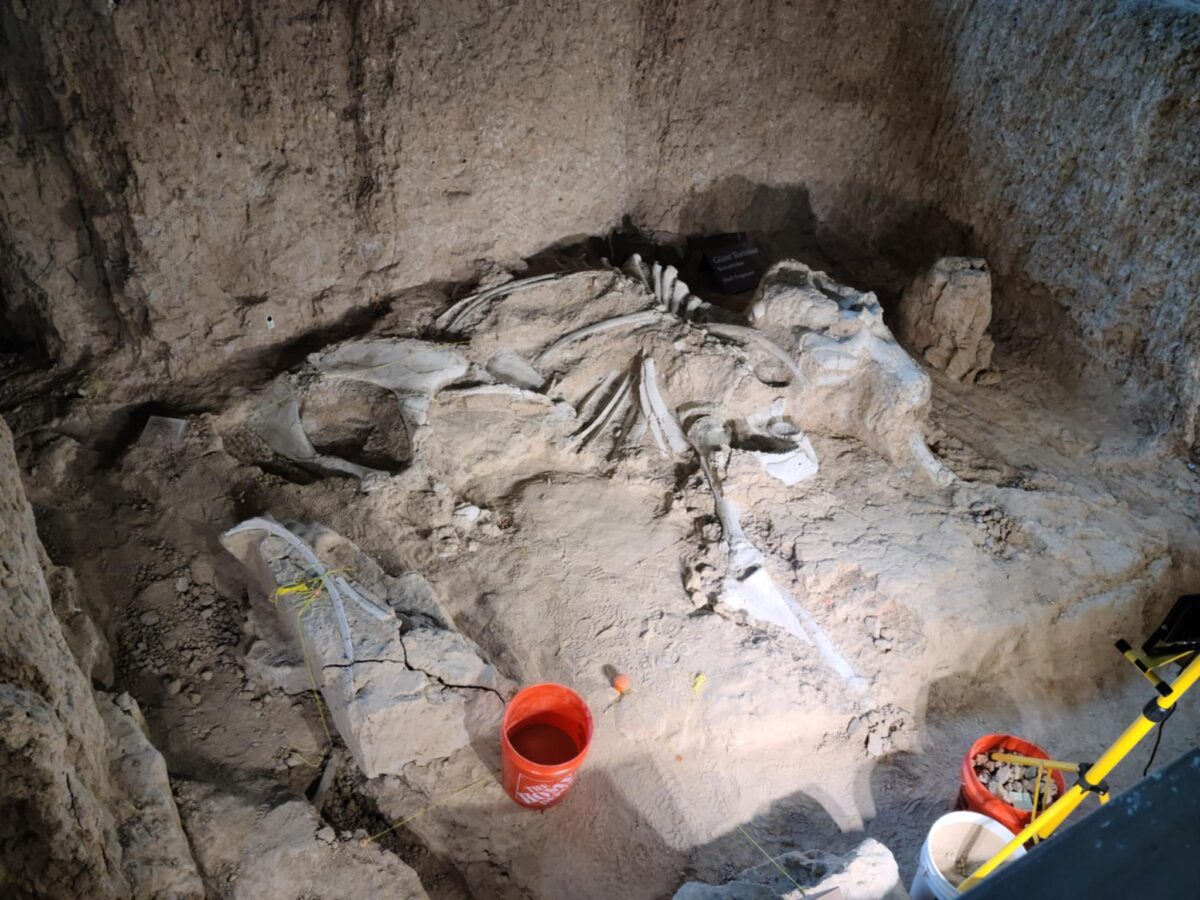
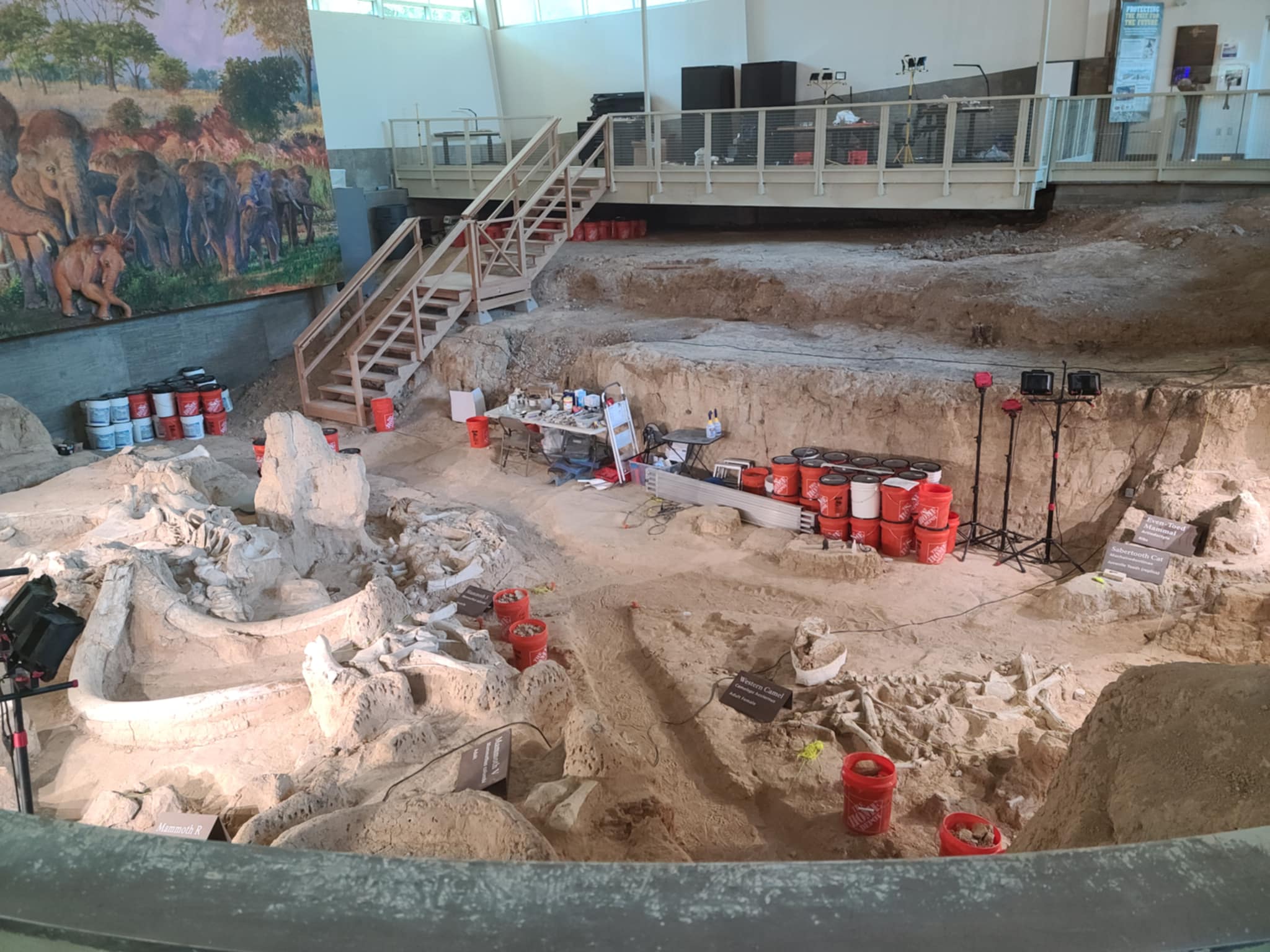 Waco Mammoth National Monument is a fairly recent addition to the National Park Service, joining the organization in 2015. It had previously been a municipal park of the city of Waco, in partnership with Baylor University. In 1978, two amateur fossil hunters had stumbled on a massive bone sticking out of a creek bed to the west of the city; consultation with academics from Baylor’s Strecker Museum (now the Mayborn Museum) determined that this was the femur of a Colombian mammoth, the larger, much-less-hairy American cousin of the famous Woolly Mammoth. Excavations eventually uncovered the pre-fossilized remains of a nursing herd of 19 mammoths that had died together 65-72,000 years ago (before the appearance of Homo sapiens or any other hominid on the continent), the only such herd yet found in North America. Upon moving earth to fill the excavations back in and restore the property for its private owner, workers discovered the remains of an additional three mammoths, including a bull that had died some 15,000 years after the herd. Baylor and the city promptly took over to continue excavations, and the final three mammoths—along with a Western camel, dwarf antelope, American alligator, giant tortoise, and the tooth of a juvenile saber-toothed cat have now all been preserved in situ inside an air conditioned exhibit shelter for the public to visit, even as personnel from the NPS continue working this active dig site.
For two people who’ve never been to any of the big western paleontological parks, this was an experience unlike any other. We’d been to plenty of museums, of course, to marvel at the reconstructed skeletons of dinosaurs, mammoths, and other megafauna, but we’d never gotten to see a dig in person, with remains laying just as they have for tens of thousands of years. The guide for our paid tour (the only way to access the shelter as the public) discussed differing theories for the herd’s demise (mudslide, flood, or famine?) and pointed out nuances of how the animals had been positioned, what had been left behind, and what the fragmentary pre-fossils both did and did not suggest. There is always a danger that seeing how the sausage is excavated, so to speak, can be a boring experience, deprived of all the excitement and glamor photos that interpretation through reconstruction can bring and replaced with tiny brushes, indistinguishable fossils, and endless buckets of dirt; not so at Waco Mammoth, at least for us (though two of the three were, of course, all over the place). Our only regret was that we didn’t have the chance to visit during the week, when we could have actually seen the dig team at work.
While we were separated from the events Waco Mammoth in some way commemorates by more time than at any other historical site we’ve visited, there was thus still a very real power of place there by that overgrown Texas creek bed. We are firm believers in the principal that explaining methodology, research, and source work can and should be made not only accessible but fascinating to the general public. Here we saw that in action, and cannot recommend it highly enough to any others intrigued by the world as it existed before our species.