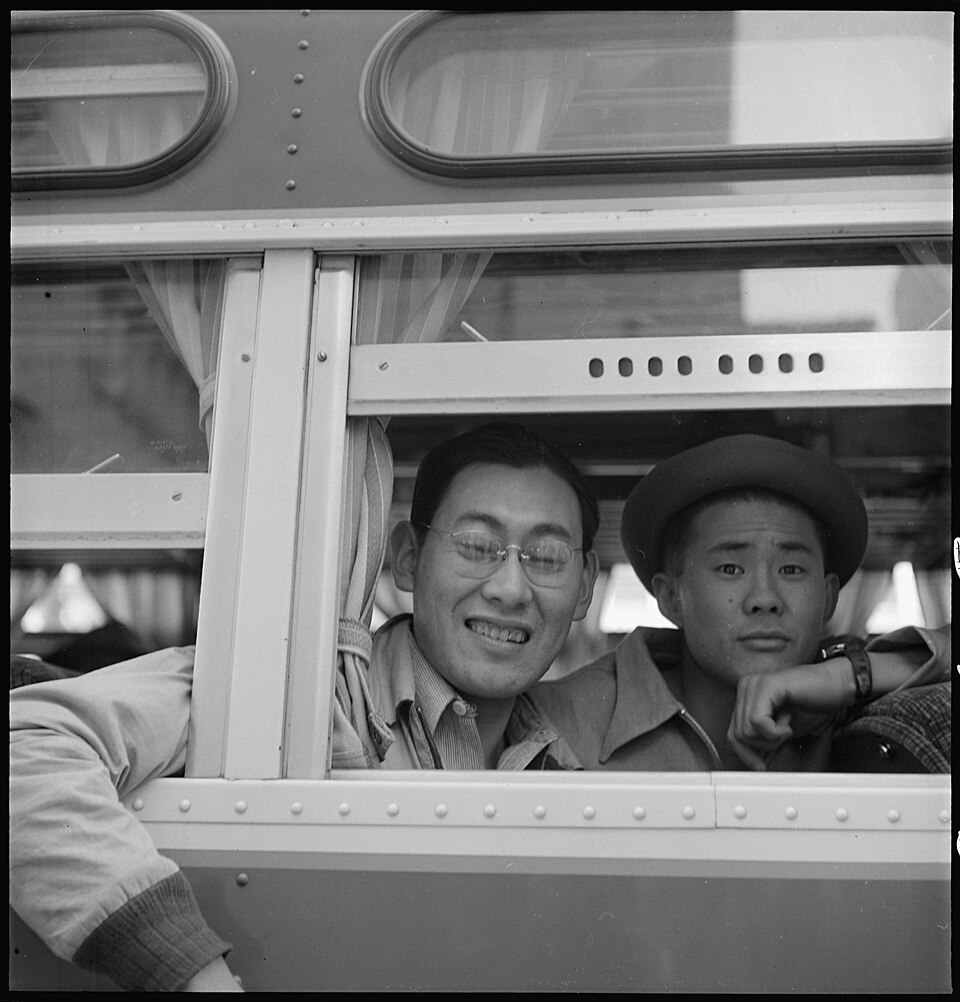
In the fourth installment of his series unpacking Supreme Court Cases that reveal unsavory truths about our country and how the legal interpretation of its founding principles have evolved throughout the centuries, Bryan delves into the complexities of the infamous decision in Korematsu v. the United States that upheld the forced relocation and internment of Japanese-Americans during the Second World War.
The Second World War is the most total conflict in which the United States has yet engaged, and simultaneously believed by most to be one of the most righteous. There is some truth to that latter sentiment, but it all too often eclipses uncomfortable realities about just how concerned contemporary Americans were about atrocities against non-white peoples abroad and how noble our prosecution of the war was, even by the standards of the time. While there are legitimate discussions to be had about the ethics of strategic bombing and the use of nuclear weapons, one of the blackest spots on the US war record is the policy of forcing Japanese-American citizens to leave their homes on the West Coast and move to concentration camps due to fears of their disloyalty and possible sabotage of military operations. When challenged, these actions were upheld by the Supreme Court in the infamous case Korematsu v. the United States. That decision has since been roundly condemned for its blatant racism and its precedent officially rejected by Chief Justice John Roberts, but the details of the case illuminate far more than simply the prejudices of the 1940s.
Japanese internment did not simply appear out of thin air in February of 1942. American racism against those of Asian descent had a long pedigree, of course, dating back almost a century. Rising tensions with Japan only field those latent prejudices, and with the surprise attack on Pearl Harbor in December of 1941 they took center stage. All levels of white society, including many military and civilian officials, suspected all Japanese of harboring sympathies for America’s new enemy regardless of their citizenship status or indeed if they had ever been to Japan in their lives. This is not to say there could never have been a potential security threat, but the reality of that eventuality was dealt with swiftly. All actual Japanese, German, and Italian nationals were swiftly expelled from the country under the 1798 Enemy Aliens Act. What’s more, the FBI and Naval Intelligence had been surveilling the Japanese-American community since the 1930s, and with the advent of war had arrested three thousand suspected subversives (only half of whom were actually Japanese). To the professional intelligence agencies, then, Japanese-Americans as a whole posed no serious threat to the war effort, but that wasn’t enough for either the public or the military. Newspapers assumed their guilt, and top brass insisted that all Japanese must be removed from the entire West Coast as a safeguard in the event of a Japanese invasion. Roosevelt duly obliged, issuing Executive Order 9066 in February 1942, which designated the coasts of Washington, Oregon, and California sixty miles inland as a military zone and and allowed the removal of any individuals deemed to be a threat to that zone, with little or no provision for the protection of their property during their absence.
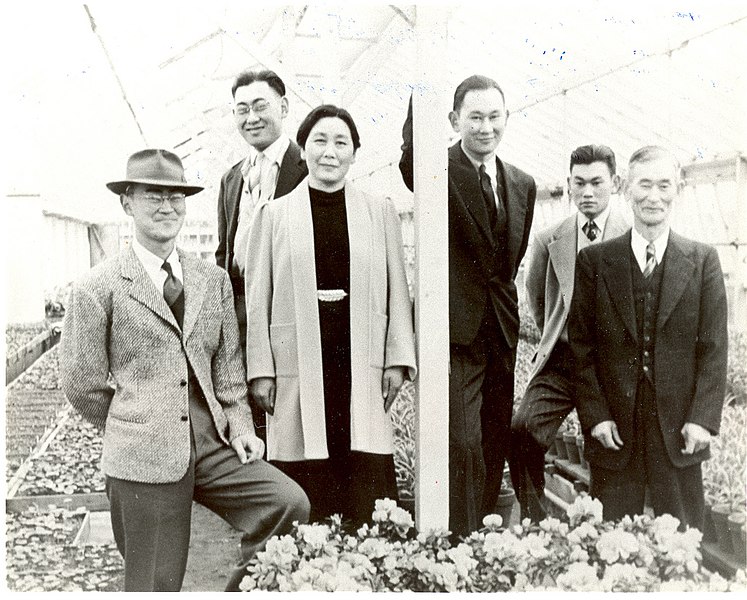
One of those individuals, San Leandro, California resident Fred Korematsu, refused to leave his home, was arrested, and ultimately convicted of disobeying the order. Korematsu appealed on the grounds that the order violated the due process guaranteed to all citizens by the Fifth Amendment to the US Constitution. HIs conviction was upheld by the Ninth Circuit, and when the appeal reached the Supreme Court in 1944, they agreed. In a 6-3 decision, Justice Hugo Black wrote that while allegations of racial prejudice merit the strictest of scrutiny, Roosevelt’s order had not in fact been racist. What’s more, he observed that the order’s validation by Congress and the necessities of wartime compelled the court to show deference to the Executive Branch. In a twist, however, a unanimous ex parte ruling from the court stated that American citizens with no evidence of disloyalty could not be detained. The effect of these two rulings was that Japanese removal had been declared legal, but Japanese internment illegal. Notified this would be the decision, Roosevelt issued a public proclamation the day before their release aimed at shutting down the internment camps and allowing Japanese-Americans to return to their homes.
The most obvious takeaway from the Korematsu decision is of course it’s racism, despite Black’s protestations to the contrary. It is true that the order itself did not specifically call for the removal of any particular race or community of people in its text—but the circumstances leading to its issue and its intended effect was explicitly racial. This is just one in a long line of examples of how even our judicial system’s “strictest scrutiny” tends to confine itself to technicalities and the letter of the law rather than considering context and effect, but it goes beyond that. In declaring that this specific action was militarily necessary, the court accepted the notion that it was reasonable to suspect the loyalty of Japanese-Americans simply on account of their ethnicity, without any recourse to evidence or even a trial. In short, that they could never really be fully American (and no such actions were taken towards German- or Italian-Americans on the East Coast). Internment was no mere inconvenience, either. Over one thousand people died, and modern estimates place property loss at $1-3 billion (not adjusted for inflation), of which only $38 million was repaid in 1948 (along with $20,000 for every survivor in 1988). Justice Robert Jackson’s dissent thus rightly argued that the order violated the Equal Protection clause of the 14th Amendment, as well as the 5th’s guarantee of due process. Black’s decision is a prime example of the kinds of cases I wanted to cover in this series because it shows that when a racist era and racist people attempt to determine whether a law is racist, they will largely answer in the negative, as their own internal logic explains and excuses the kinds of persecution we should now condemn.
Beyond all that, though, Korematsu raises questions of just what happens to our system of checks and balances during wartime. The court’s decision was explicitly framed around giving more deference to the President during an active conflict. This sort of principle is not new, and indeed I recently learned of a whole school of Constitutional interpretation that argues the Judiciary should only contend legislative and executive actions when absolutely necessary—if even then. In my opinion, this school and this decision fly in the face of principles of accountability and fundamental rights. Any historian can tell you that rights are most in danger of being curtailed, even snuffed out, during wartime precisely because the need for decisive action can often be used to argue for the easy way out or as a cover for accumulating greater power. The idea that the President can do whatever he wants without legal recourse for citizens is always a dangerous one, whether tied to the nature of his office or to specific situations—and can lead to the manufacture and declaration of those situations to pursue nefarious ends under the fig leaf of legality.
These events did not occur in a vacuum, however, and Executive Order 9066 cannot be divorced from America’s conduct of the wider war. The scope of this order is striking; eventually, under it and related actions, areas on both East and West coasts amounting to a third of the country would be designated as military areas. On the one hand, the idea that the military needed to protect access to the entire West Coast, up to sixty miles inland, to guard against an invasion from Japan when the bulk of the Japanese army was tied down in China and any such attempt would be detected long beforehand, seems ridiculous—and indeed Jimmy Carter’s Commission on Wartime Relocation and Internment of Civilians found in 1982 that the order had no basis in military necessity. On the other hand, the Second World War penetrated all levels of society and affected countless civilians. The United States had no problem deploying firebombing and weapons of mass destruction against civilian populations in violation of the contemporary laws of war in order to bring the conflict to an end, and these orders seem to extend that same logic of military involvement to its own citizens. I can’t help but suspect, though, that if Japan had been able to bomb San Diego or Seattle, we would have considered that a war crime regardless of Roosevelt’s order and our own behavior.
Now, eighty years on, Japanese internment has rightly been rejected, legally and morally, at all levels of the country and by both parties (to date, at least), yet it still casts worrying echoes. The decision in which Justice Roberts deprived Korematsu of the force of precedent, 2018’s Trump v. Hawaii, was the challenge to Trump’s racist ban on travel from Muslim countries to the United States. The Roberts court upheld that ban, and in the same breath as he denounced Korematsu Roberts blithely wrote that there was absolutely no connection between the two cases—choosing to focus on the letter of the law, preventing travel of foreigners versus the treatment of citizens, and not the spirit: that members of a certain community were being assumed guilty just by their membership in it. Just this month, Trump invoked the Enemy Aliens Act for the first time since the Second World War to deport undocumented immigrants accused of crimes without due process for those crimes or even their immigration status—and seems to be relying on a phony definition of “war” to enable that action. All this comes on top of the growing influence and at least partial triumph of conservative theories of jurisprudence and governance that claim the Executive Branch is beyond challenge or accountability either during or after a President’s term. The questions Korematsu raises are still intensely relevant, almost a century later.