by Bryan & Heather
In January of 2025, Bryan and Heather took a long-anticipated trip to explore the city of Mobile, Alabama. Home to history from Spanish colonization through the Civil War and beyond, the City of Six Flags, as it is sometimes also known, sits at the mouth of one of the biggest watersheds in the continental United States and is home to a busy port and diversity both ecological and human. This is the second in a series of posts detailing their experiences touring the city and reflecting on how its history is presented to the public. The first, on the interpretation of the last known slave ship to make landfall in the United States and the community descended from it, can be found here.
“Damn the torpedoes. Full speed ahead!”
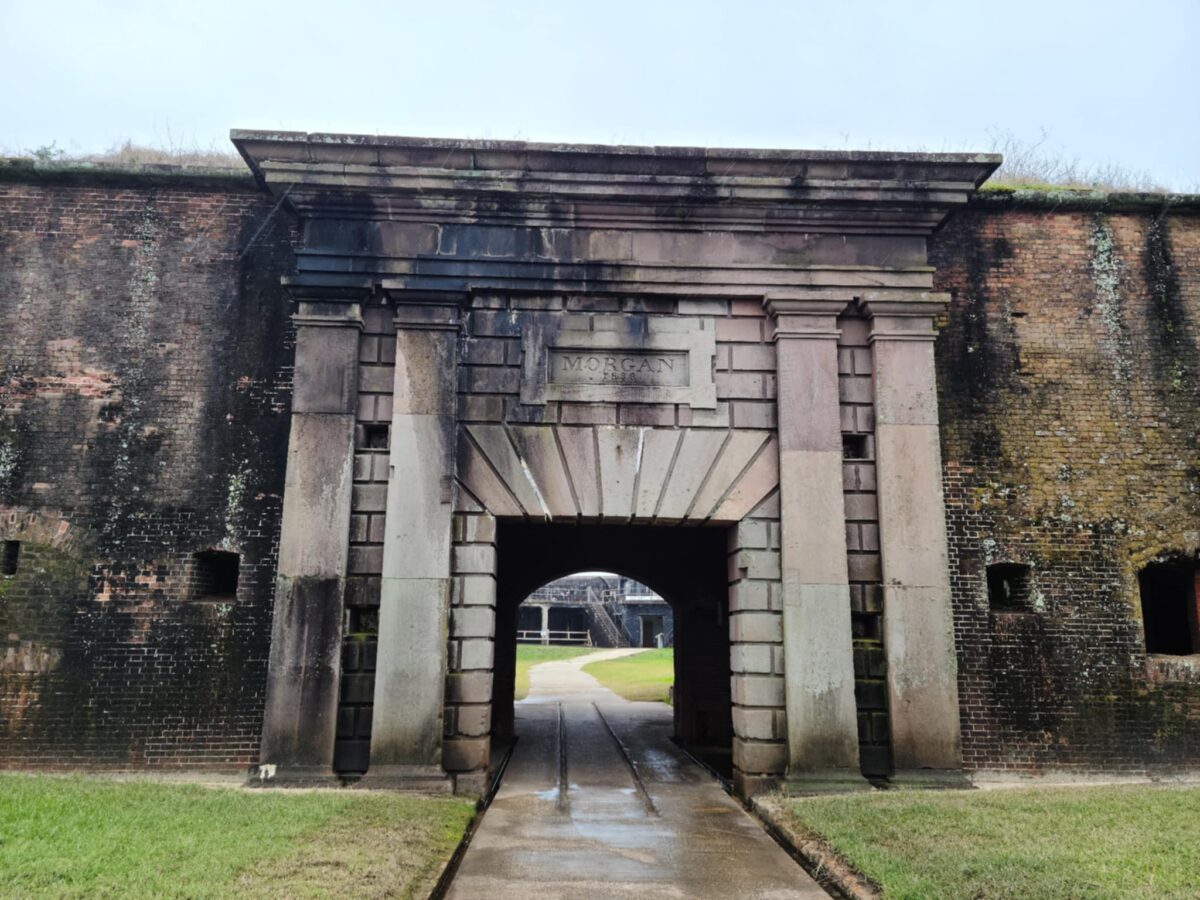
Ever since moving to Alabama in the late spring of 2021, Bryan had been looking for a chance to drive down to the Gulf Coast and see the location of Admiral David Farragut’s famous order at the Battle of Mobile Bay. As we learned while planning our 2025 trip to Mobile, that meant a visit to the Alabama State Historical Site of Fort Morgan.
Located on the western tip of the bay’s shielding peninsula, Fort
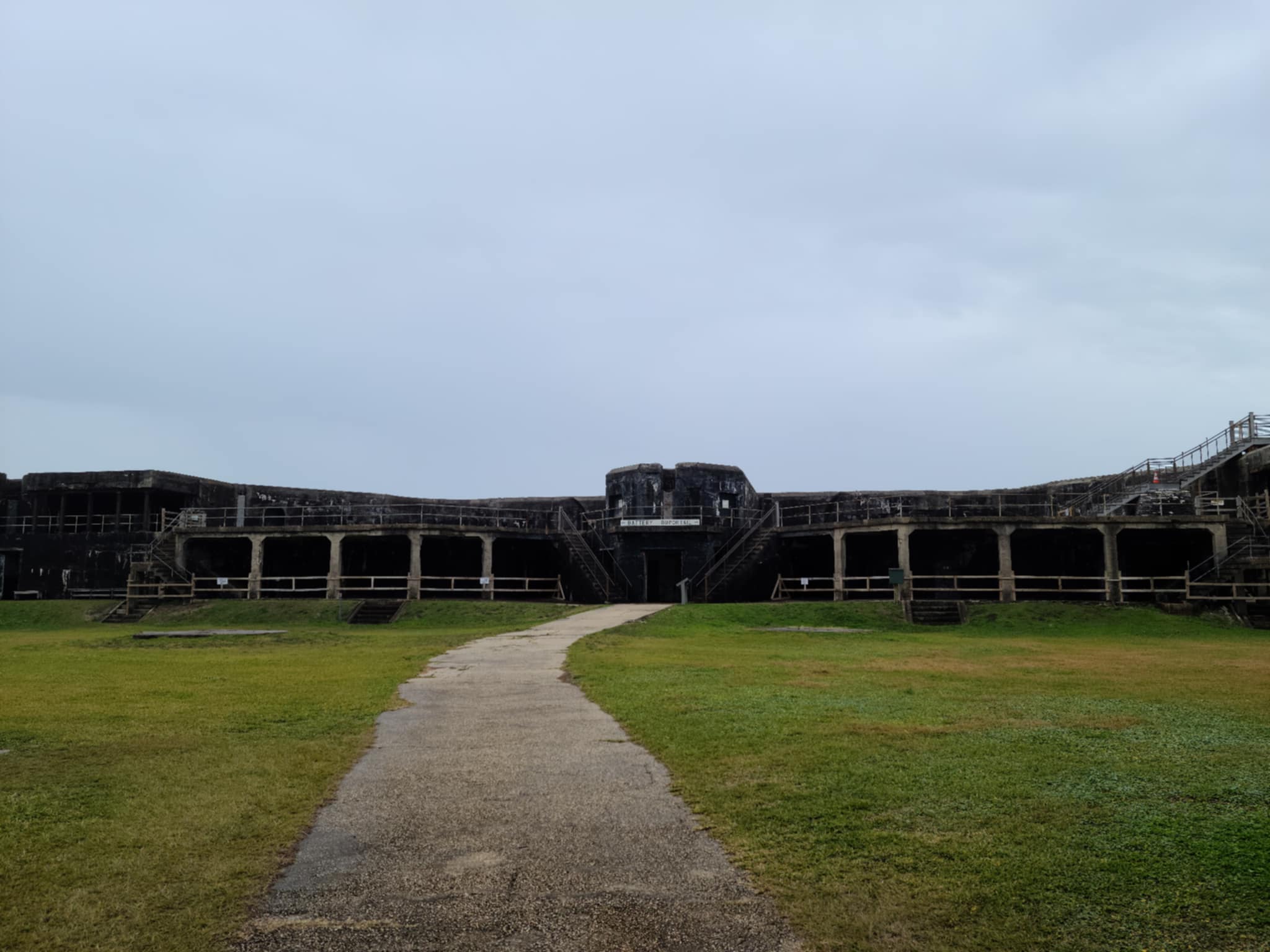
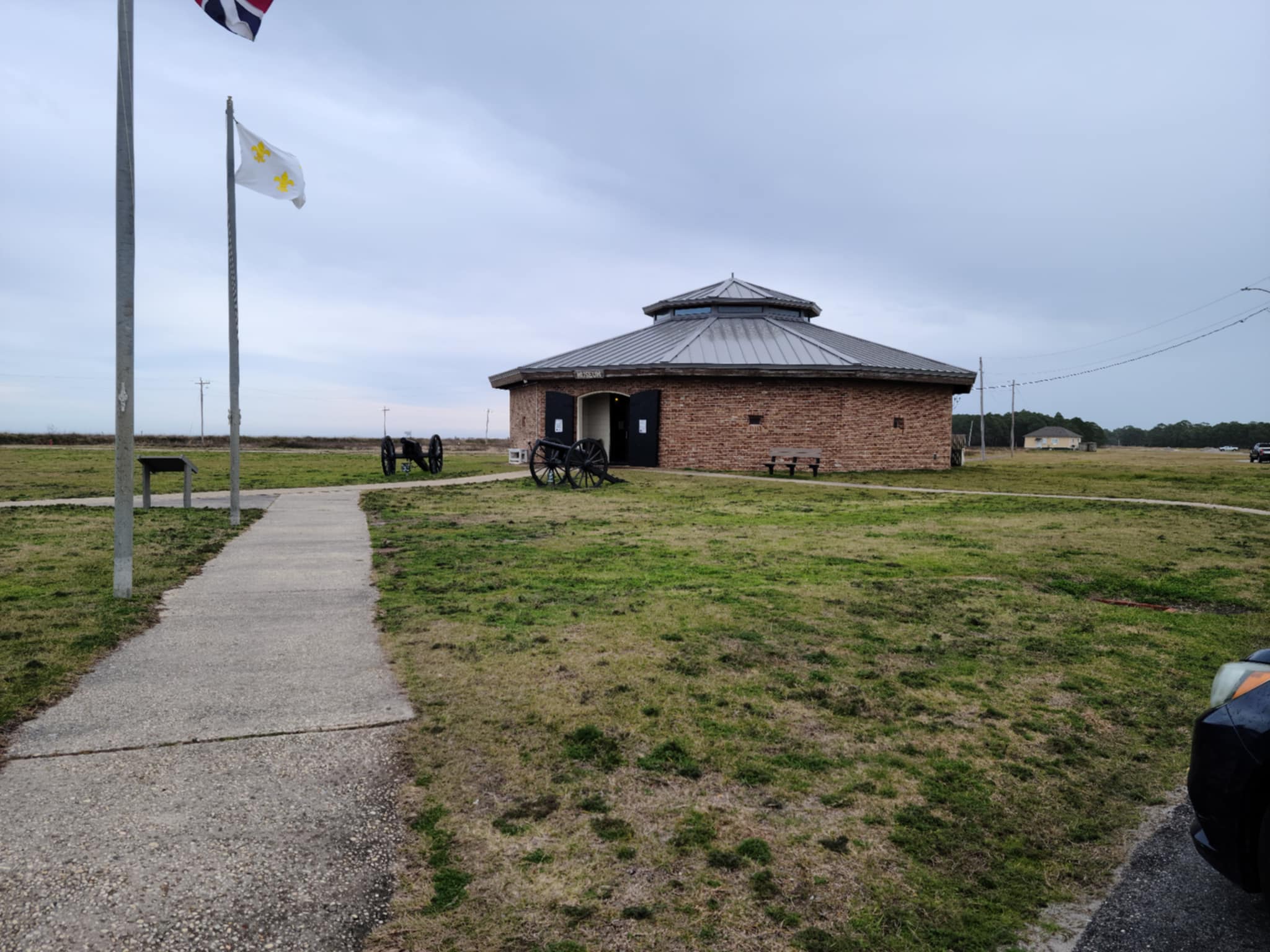
Morgan is just the Civil War-era incarnation of a fortification that has guarded Mobile (in conjunction with its sister Fort Gaines on Dauphin Island, which privately operated) for centuries. Admirably, the onsite museum and interpretive materials embrace the full spectrum of history there and in the surrounding coastline. Part of this is not exactly avoidable, to be sure; the conversion of the fort’s 19th-century masonry bastions into more modern hidden batteries in the early 20th century means that visitors cannot escape that more recent history. Steering into this reality, Fort Morgan explores not just the story of the Civil War garrison and 1864 battles but lighthouse operation and life during a peacetime skeleton garrison in brief yet fascinating fashion.
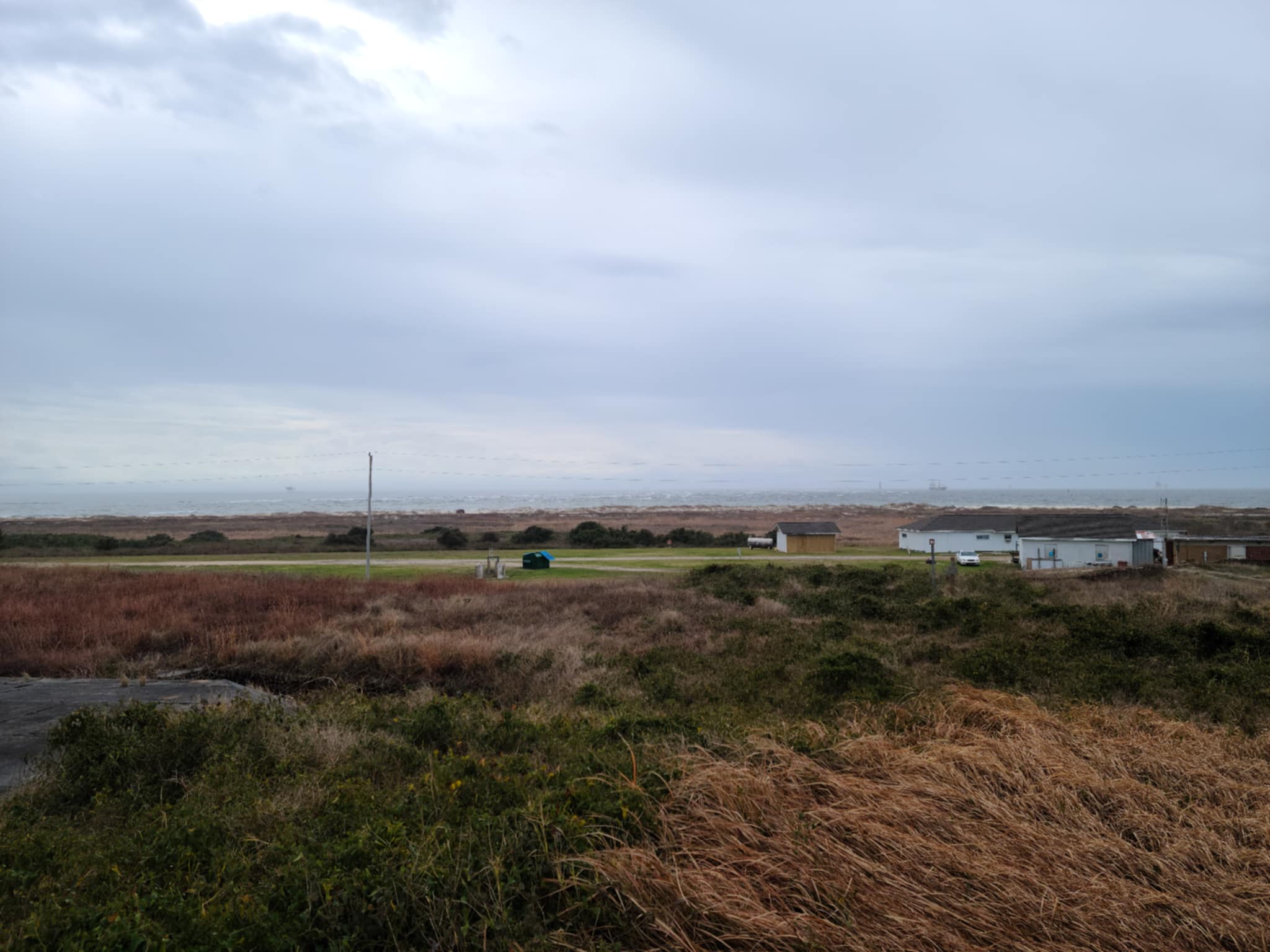
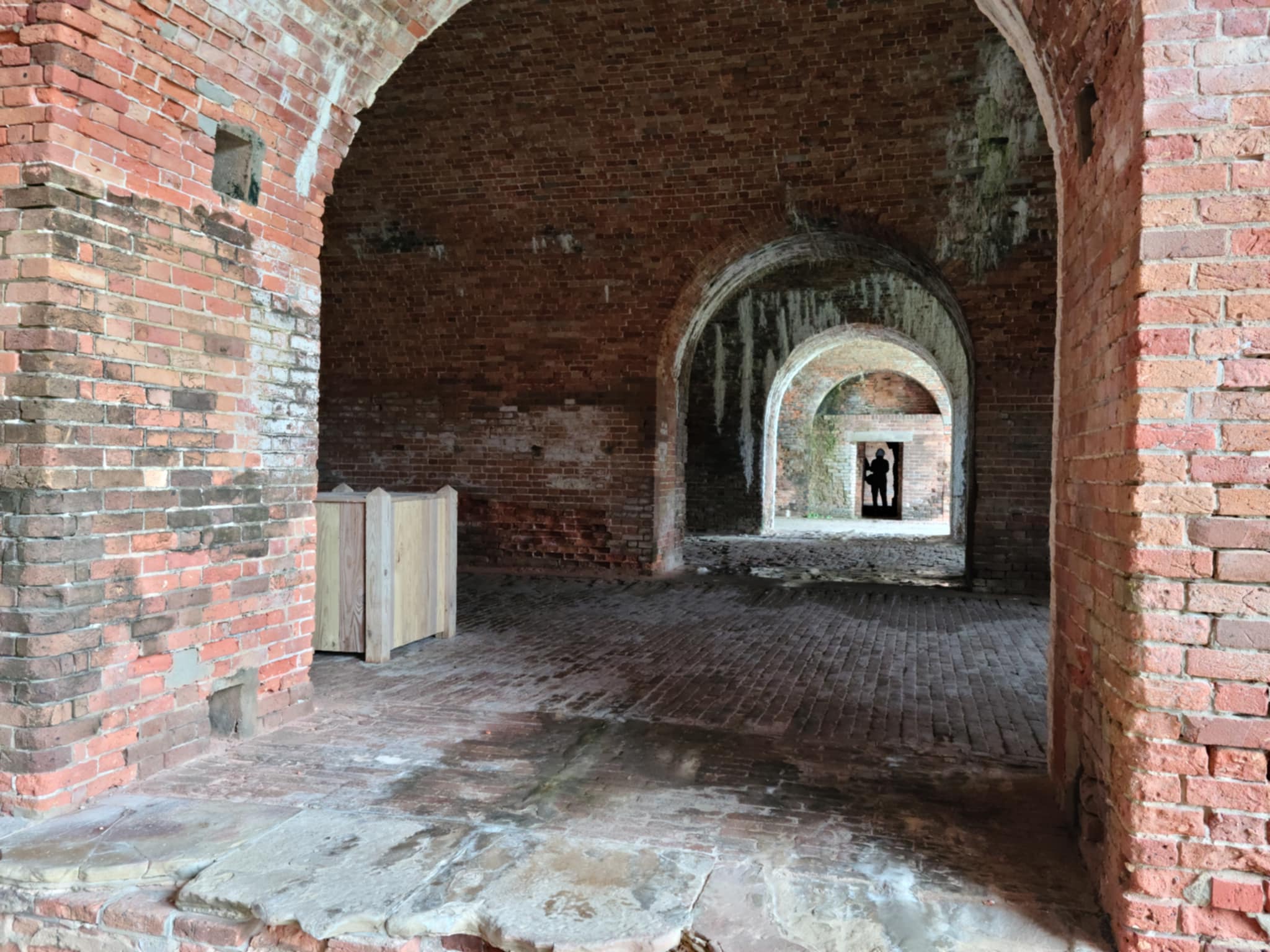
Yet while Fort Morgan certainly hit the necessary core of material, we couldn’t help but see missed opportunities at every turn that could have elevated our historical experience into something truly special. First and most basically, it’s still surprising to us that such a high profile Civil War site is not under the aegis of the National Park Service. Further, the fort’s power of place is never really developed as much as it could be. Very few orienting images or markers exist around the grounds to situate visitors, and we would have loved some form of painting or representation of the battle up on the ramparts to help us envision precisely where and how Farragut and his squadron proceeded under bombardment through the Confederate minefield. The fort itself was fascinating, too; we noticed the beginnings of actual stalactites forming from the centuries of dissolving lime in the bricks! No plaques anywhere in the vicinity. Our questions continued into the museum.
One whole exhibit case was devoted to a story during the Civil War wherein the test firing of an artillery piece went horribly wrong. An un-reinforced iron barrel blew apart, killing the commander of the garrison and the entire gin crew—yet nowhere in the interpretive text did it directly confirm that the dentures on display were in fact the commander’s original dentures and the only identifiable remains of his body! In the more modern section, Heather happened upon a mysterious, slightly disturbing, photograph of the entire garrison after some kind of sporting event with one of their—smiling—members appearing bruised and bloody all over with no mention of why this might have been the case. Talk about ignoring a quirky human interest story!
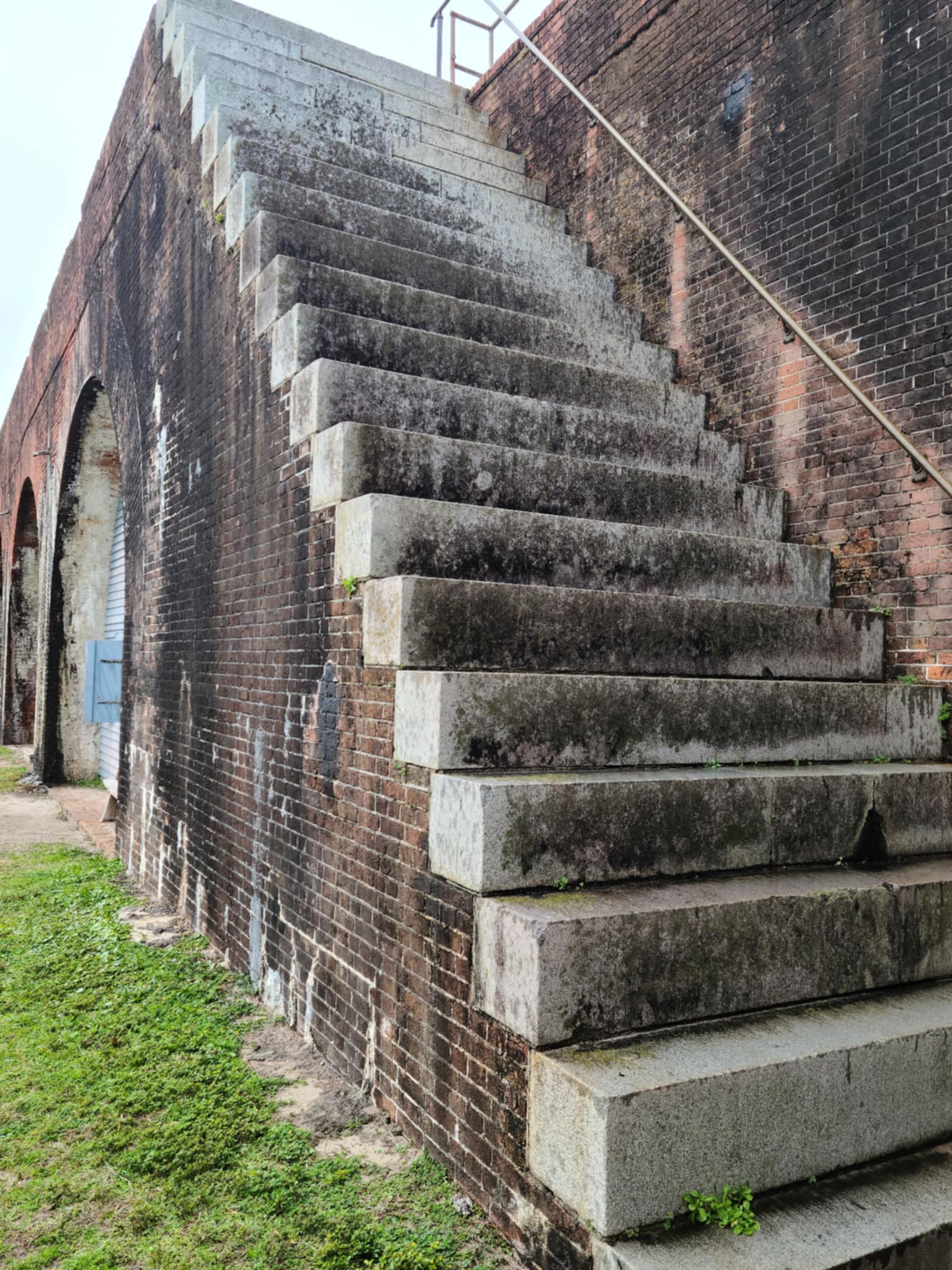
If Fort Morgan was perhaps not quite all we had wanted it to be, though, it was still a lovely, atmospheric outing to what can seem like the end of the world on the extreme outer limits of the Gulf Coast. Dress for wind and mist, watch your step on the precipitous stone stairs, and learn a little bit more about this unique spit of land. We just wish you could learn a bit more.