by Bryan & Heather
In January of 2025, Bryan and Heather took a long-anticipated trip to explore the city of Mobile, Alabama. Home to history from Spanish colonization through the Civil War and beyond, the City of Six Flags, as it is sometimes also known, sits at the mouth of one of the biggest watersheds in the continental United States, home to a busy port and diversity both ecological and human. This is the first in a series of posts detailing their experiences touring the city and reflecting on how its history is presented to the public.
Sometimes, luck is everything when planning a trip. Ever since moving to Alabama in the spring of 2021, visiting Mobile had been on our radar due to the city’s famous role in the American Civil War. Those general thoughts finally became reality late in 2024 as we planned a mid-winter escape to the Gulf Coast. Still in the early phases of planning out our vacation and less than a month before we were scheduled to leave, we happened upon a Netflix documentary that demanded adding a stop on our itinerary: Margaret Brown’s Descendant. Intrigued by the story of the last slave ship known to make landfall in the United States (the Clotilda) and the community of Africans that came from it, we knew we had to add their museum, the Africatown Heritage House and its Clotilda exhibition, to our itinerary, and it actually ended up being our gateway to the area.
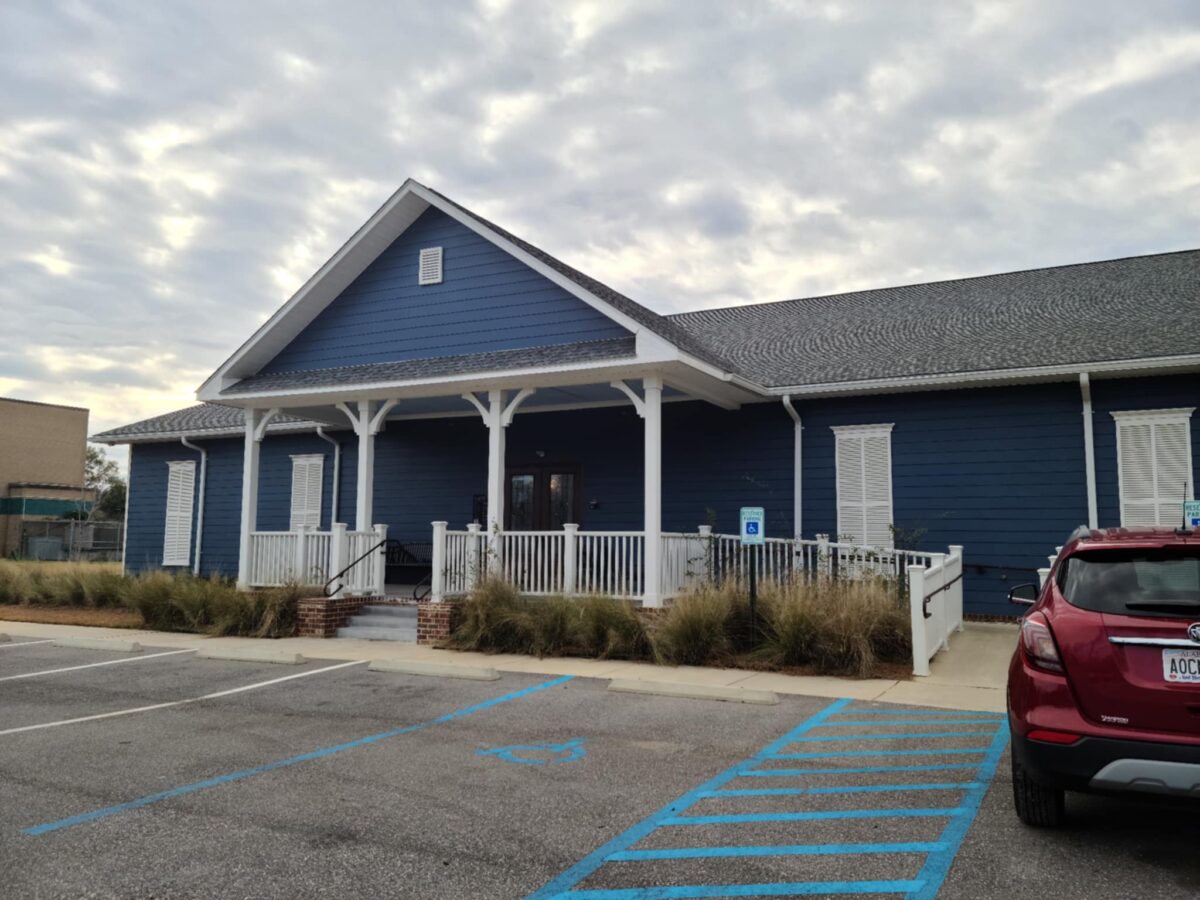
As you drive through Plateau, Alabama, it’s clear that the community has fallen on hard times (a central theme of Descendant, in fact, so we were not exactly surprised). But it is equally clear that there is a resilient pride there, too, epitomized in the Heritage House itself. Well maintained and cheery, it’s operated by locals—though in partnership with National Geographic and the Smithsonian—one of whom, when we visited at least, was herself a descendant of the survivors of the Clotilda. The exhibit itself was modest in size, about what you’d expect from a small-town museum or historical society, but crafted and interpreted in ways you often don’t see from such local attractions, really immersing visitors through audio presentations in dialect and clever design. It is, in effect, a microhistory: rather than attempting to tell the history of the slave trade as a whole using its specific subjects as examples, the exhibits focus in on the reality of the lives of those who would eventually come to found Africatown, from West African cultures to kidnapping, enslavement, Atlantic passage, slavery, and eventual freedom. Because the survivors spent such a relatively short time enslaved in the area (the Clotilda landed in 1860, only five years before effective emancipation with the 13th Amendment), the Heritage House was different than other slavery sites we’ve toured in the past. Here, it was life in Africa and life as freedmen and women that took center stage, not the brutality of enslaved plantation life. Just as its subjects had stood apart due to their lived connection to Africa so long after so many of their fellow freedmen had resigned it to distant inherited memory, so too did the Heritage House feel like something wholly different.
When we got to the final room featuring the actual wreck of the Clotilda, however, we couldn’t help but feel a little disappointed. Brown’s documentary had centered around the long hoped for discovery of the ship (which had been burned and sunk the night it made landfall in 1860 in an effort to cover up the crime of engaging in the slave trade over fifty years after its ban), but hadn’t really delved into any of the history or marine archaeology associated with the find. We had hoped to find that side of the story at the Heritage House, but sadly, it wasn’t there, either. The final room of the exhibition was given over entirely to the wreck, but really only in a way that skimmed the surface. There was a cool sonar image on one wall, and actual fragments of iron and wooden parts of the ship suspended in saltwater, but no real details. The ship was just…there. Indeed, for a more cohesive interpretive experience, we would have loved to see the wreck incorporated into the flow of Africatown’s story, using it to bring home the realities of the Clotilda itself and its transatlantic passage.
In another way, though, this near-afterthought treatment of the Clotilda made a sort of sense. Sure, some signs made clear that a whole bank of tests is still being analyzed to determine what all can be learned from the site. In a greater sense, however, the story of Africatown really doesn’t need the physical remains of the ship to be told. In some sense, it is admittedly a validation, proving these peoples’ stories are true—though as the Heritage House makes clear, that was never really in doubt, and the Clotilda’s journey was an open secret from the very beginning. What this discovery has really done, it seems to us, is provide the community with a rare opportunity to draw in both funds and attention, and they have seized that chance with both hands and fantastic results. It’s a shame that it took so much and so long for such a unique community to be able to amplify its voice, but we are glad that it has finally happened, and we can’t recommend checking it out highly enough.