As George Lucas’s Star Wars, Episode II: Attack of the Clones (2002) draws to a close, the galactic peace that has lasted for a millennium has been shattered. The shadowy cabal of corporate interests behind the Separatist Confederacy of Independent Systems has attacked a contingent of Jedi with a massive, secret droid army and begun their attempt to formally secede from the Galactic Republic. Just as all appears lost and the Republic seems it will be left defenseless against the coming onslaught, Jedi Grand Master Yoda arrives with the cavalry: a tailor-made (literally) army of clones that rescues the beleaguered Jedi and comes to the defense of the previously-demilitarized Republic. In the heat of the moment, the surviving Jedi take command of this new Grand Army’s formations and lead them into battle—but was this the right decision? And was it even a good one at the time?
By the opening of the final film of Lucas’s Prequel trilogy (2005’s Star Wars, Episode III: Revenge of the Sith), this arrangement of the Jedi Order stepping into the role of senior officers for the Republic’s war effort has become official. While just the previous movie saw Jedi Grand Master Mace Windu remark that the Jedi “are keepers of the peace, not soldiers,” it appears that becoming generals is another matter entirely. Some Star Wars fans over the years have seen this decision as hypocritical, both in light of Windu’s specific statement above and in relation to the Order’s previous role as “keepers of the peace.” On the contrary, Windu’s quote in context is specifically about there being too few Jedi to serve as soldiers across the breadth of the Republic on their own and, as I discussed previously here on Concerning History, “peacekeepers” does not equal pacifists. In fact, the decision of many Jedi to take rank in the newly-created Republic military makes a good deal of practical sense. At the beginning of the Separatist crisis, and for nearly one thousand years beforehand, the Republic did not possess a standing military of any kind. When necessary, it could call on the defense and police forces of its member star systems and coordinate them in addressing a threat. As a result, there was essentially no one in the Republic at the time of the Clone Wars who could have filled the role of general or flag officer. In that situation, turning to a body comprised of likely the most educated, intelligent, competent, and moral individuals in the galaxy, that are already part of the government and extensively trained in martial arts, is a no-brainer—and not without some historical precedent in our own world.
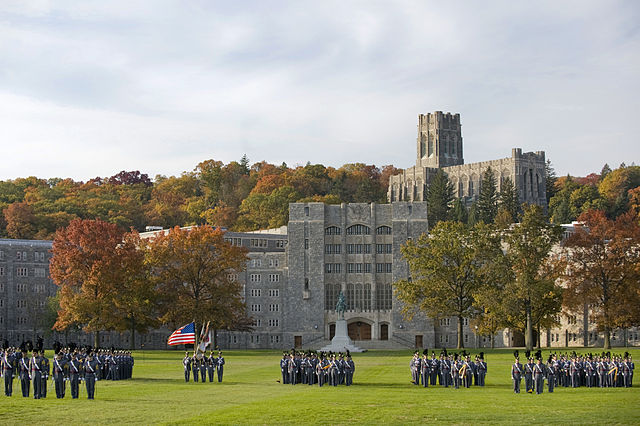
The idea of a small corps of highly trained individuals who can step into the role of officers to command a massive newly-raised army in a crisis was, as it turns out, essentially the foundational plan of defense for the United States of America. As I’ve written before in my breakdown of some of the Founders’. . .less well thought out philosophies, many of our nation’s founding generation feared the corrosive influence of standing armies on individual liberty and democratic society at large, and so relied on militia for the common defense. This was also a cost-saving measure; standing armies cost money, and in the pursuit of low taxes and small government, early presidents determined to make do with as little military as they could during peacetime. In 1802, Thomas Jefferson made this policy official by signing the Military Peace Establishment Act. The Act, which Jefferson had been instrumental in drafting, established caps on the size of the United States Army and its officer corps during times of peace as well as providing for the creation of a military academy (the now-famous West Point) and accompanying corps of trained engineers. If and when war were to be declared, these officers and professional soldiers would form the core of an “expansible” army, being promoted and parceled out to take charge of training and leading larger bodies of militia or volunteers raised for the conflict. While the War of 1812 occurred too soon for Jefferon’s system to have taken full effect, the Mexican-American War of 1848 saw the vindication of West Point as a training ground for excellent officers, even if the armies of the conflict were actually made of cohesive Regular Army and volunteer units that did not mix. It would be the American Civil War in 1861 that saw the concept of an expansible army be put into practice by both the Union and the historical Confederacy (coincidence?), and it would prove both workable and likely inadvisable in the face of a more professional force, considering how long it took both sides’ armies to become effective fighting forces. This would be the first and last time, however; at least as Jefferson had envisioned things; the Spanish-American War over three decades later would be fought by small regular/volunteer armies in the style of the Mexican-American War, and with the turn of the 20th century came a new age of mass conscription that did have some superficial resemblance to a force of militia, but underwent much more extensive training and was concentrated under Federal control from the moment of enlistment.
In Star Wars, of course, the Republic’s own use of expansible army systems would prove to be a bad idea in a different way. Scattered and isolated across the galaxy, Jedi Generals and their apprentices (given the rank of Commander) would be easy prey to the forces of the enemy and, ultimately, to the very troops they led as the Sith Lord secretly in charge of the Republic activated his final plans for the death of democracy and the rise of the fascist Galactic Empire. That, however, was more a result of the no-win situation the Jedi unwittingly found themselves in than any inherent flaw in their decision. For all the ills that beset our world, we can be thankful that cartoonishly evil Sith Lords are not among them.