by Bryan & Heather
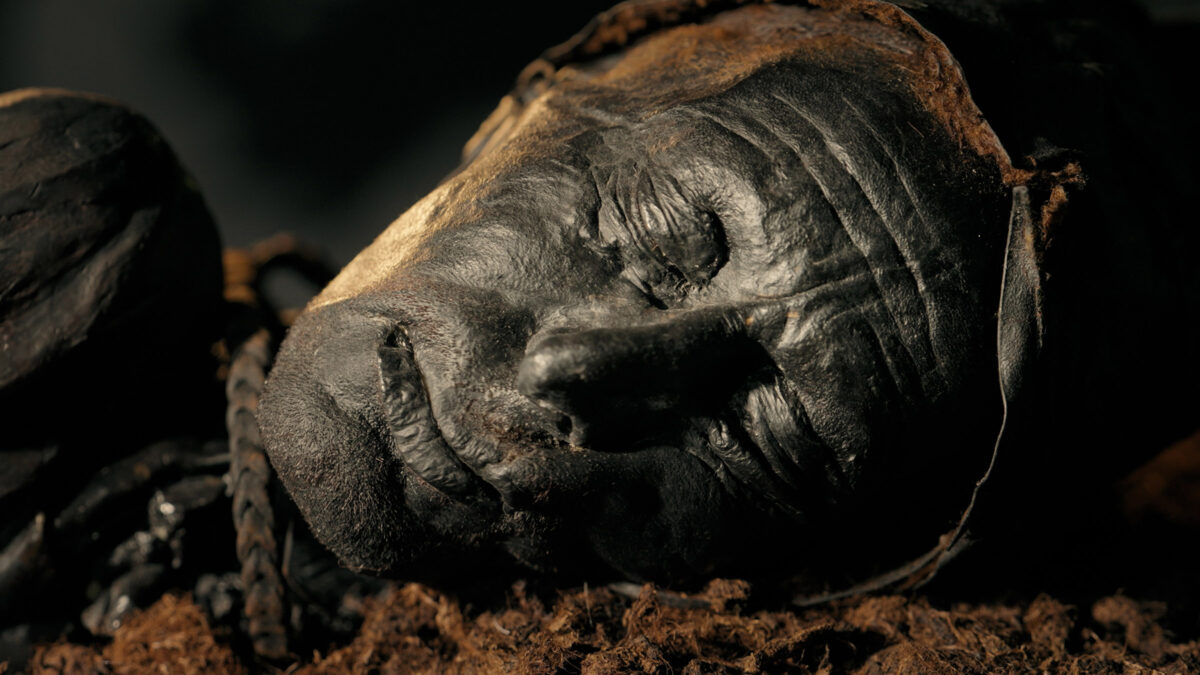
There is usually a point for history majors after which most television docuseries become a bit too basic and un-academic for our tastes. Every once and while, though, something can break through the noise. So it was when we happened to notice a National Geographic series delving into the discovery and history of famous mummies throughout the world. We both consider ourselves at least interested amateurs in archaeology, and Heather was particularly excited by the promotional imagery that seemed to suggest a spotlight on Europe’s Iron Age “bog bodies” (which in fact became her unofficial offhand name for the show). National Geographic has itself proven to be much more historically educational and responsible than other history-themed channels in recent years, so we were more than happy to give it a shot.
Ancient Bodies: Secrets Revealed turned out to essentially be an anthology series. Each episode focuses on a specific body, detailing its discovery, efforts at preservation, and museum housing and provenance interspersed with what historians have learned and theorized about each of these individuals’ lives and the circumstances of their deaths. Most of the cases are indeed European bog bodies, but the first episode highlights perhaps the most famous non-Egyptian mummy of all time, Özi the Iceman (which Heather had actually never encountered before this, to her memory) and the final episode explored the case of three Incan child mummies found high in the Andes Mountains. For those who have never seen these types of remains (and even for those already familiar), it is truly astonishing to see how well preserved they are and the correspondingly high level of knowledge archaeologists have been able to glean from them—especially given that most were found not as a result of organized excavations but through the everyday labors of cutting peat to be used as fuel.
As fascinating as we found its subject matter, though, Ancient Bodies didn’t quite make our top tier of documentaries. One of its most obvious flaws was that of organization. It quickly became clear to us that this was not a series originally designed for streaming, and indeed further research revealed that it had originally aired on television in Canada (and that a second, as-yet-unavailable season was airing as we watched!). Foundational concepts of bog preservation, archaeological and museum methods, historical theories regarding the nature of Iron Age spirituality and sacrifice, and even why modern people were cutting peat in the first place are explained anew virtually every episode. For a show which casual viewers might happen upon in the middle of its season, this is an understandable style, but for us watching it in a (relatively) short, focused period of time on streaming, it felt like a substantial amount of fluff that could have been cut out in favor of more interesting, in-depth discussions.
On a more historical note, we also found ourselves disappointed by Ancient Bodies’ more populist approach to its subject matter. While much more responsible and informative than other modern shows of this ilk, the series opted for a more sensational, personal-interest approach over something more unified and analytical, essentially turning the discussion of each body into more of a true crime podcast than a historical documentary. Historians and museum personnel that serve as talking head experts speculate about details of each murder (the nature of bog burials, and the specific details of Özi and the Incan children, mean that none of these people died of natural causes) in ways that serious historians would never in their professional inquiries, asking questions that are inherently unanswerable based on the evidence we’re likely to have and whose answers would not meaningfully advance the field—at least as they’re portrayed here. It may in fact be the case that many of the answers or theories surrounding these bodies have contributed significantly to our knowledge of Iron Age Europe (and Copper Age Europe, and Incan civilization), but the choice to tell each story in a historiographical vacuum and in no particular chronological order (either of the discovery of each body or in the time these people would have lived) means that in every case these remains are discussed within a framework of pre-existing, stated-as-fact conclusions that viewers do not know the basis of. We think it is highly likely that much of the information in question actually came from, or was confirmed by, the study of these very same bodies, and a framework in which the show began with early specimens and slowly built upon those studies as it presented each new find would have demonstrated how interrelated their stories all have been in the modern era—not to mention showing the public how historical knowledge is actually generated, scrutinized, debated, and accepted.
This is not to say we didn’t enjoy Ancient Bodies, to be clear. None of the information it delivered seemed inaccurate to our admittedly less-than-familiar eyes (though perhaps sensationalized at times), and we could see it being the kind of chance encounter that fascinates someone so much that it sparks a lifelong obsession or even pursuit of a career in archaeology. For our overall tastes, however, it remains true that if you read seriously in history, most programs of this sort are not going to live up to your own levels of engagement with the subject.