In the fourth installment of his series highlighting some of the worst-reasoned Supreme Court decisions in American history, Bryan delves into the perplexing details of a criminal conviction from the 1970s and its far-reaching implications for Americans’ privacy in the digital age.
The disconnect between existing laws and the realities of society in the age of the Internet and social media has provided endless material for articles, documentaries, and shows over the past decade. Often, this comes from new, previously-impossible kinds or quantities of behavior that current legislation cannot adequately define or account for. There is another side to this outdated legal framework, though; as our telecommunications technology gets ever more advanced, law enforcement has continued to rely on a Supreme Court decision made almost fifty years ago to sidestep Constitutional protections of privacy even after the way we communicate has come to barely resemble the world of the 1970s.
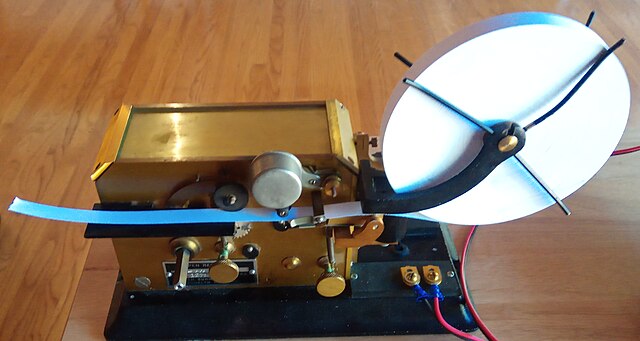
In March of 1976, Baltimore resident Patricia McDonough was robbed. She gave a report to the police, including a description of the man and the 1975 Monte Carlo she believed he had been driving. Yet McDonough’s ordeal had only just begun. A few days later, she began receiving threatening calls from an unknown caller, one of which told her to go stand out on her porch-–and as she did so, a certain familiar Monte Carlo drove past. Eleven days after the original robbery, police observed a Monte Carlo matching McDonough’s description in her neighborhood, ran its license plate, and learned it belonged to a Michael Lee Smith. With the cooperation of the local telephone company, and without a warrant, police then placed a pen register (a machine that records all telephone numbers dialed from a certain phone line) on Smith’s phone. The very next day, the register indicated that Smith had called McDonough and police used this information to obtain a search warrant for Smith’s House. When they found a phone book dog-eared to the page with McDonough’s number, Smith was arrested and, after McDonough identified him as her assailant out of a police lineup, charged and convicted.
It remains unclear to me why law enforcement did not seek a warrant for Smith’s telephone history. In researching the case, I couldn’t help but think that they clearly had enough evidence to demonstrate Smith was a person of interest and obtain one, and subsequent conversations with a close friend who works as a lawyer in a municipal District Attorney’s office confirmed as much. Maybe they felt they didn’t have time to lose, or that such a wire tapping as they intended would be too open-ended to satisfy a judge’s demand for specific, time bound parameters. Whatever the reason, the warrantless acquisition of that keystone piece of evidence—proof that Smith had called McDonough—would form the basis of Smith’s appeal, and would ultimately reach the Supreme Court three years later.
This was not the first time that telecommunications-related evidence gathering had appeared before the Court. Almost exactly fifty years previously, in 1928, Olmstead v. United States ruled that wiretapping did not require a warrant under the Fourth Amendment to the Constitution because it did not take place in a private home (a prime candidate for a post in this series, if Smith v. Maryland had never taken place). It took forty years for that odious precedent to be rightly overturned when Katz v. United States determined that the Fourth Amendment applied not just to an individual’s literal private home, but to their private life in general.
A decade on, the Court evidently decided that there were limits to how far an individual’s private life extended, and in defiance of the basic facts of Smith v. Maryland ruled that Smith’s conviction should stand. As phone numbers were simply basic information, the majority of five justices were determined to not qualitatively fall under protections of privacy. What’s more, as consumers provided these numbers to the telephone company in the process of doing business (in other words, you cannot make a call without dialing a number), individuals did not have a reasonable expectation that the information would remain private and law enforcement did not need a warrant to collect it.
The most basic objection to this ruling is that the precedent as described in Justice Harry A. Blackmun’s decision is that it completely misrepresents the facts of what happened. The police did not simply ask for information that the phone company had passively gathered; they intentionally and actively placed a monitoring device on Smith’s line that then yielded the sought-after evidence of a call to McDonough’s home. This disconnect between logic and reality would alone be enough to qualify it for discussion here, but that is only the tip of the legal iceberg.
It is perhaps not surprising that a group comprised only of men (and all but one of them white) in 1979 may not exactly have a handle on modern conceptions of consent, but the sophistry here remains breathtaking. Just because an individual shares information with a certain (private) third party in no way means that they cannot reasonably expect that information to not be shared any further, including and especially with the government. I share my credit card information with vendors both online and in person nearly every day as a necessary part of doing business; does that mean I have no reasonable expectation that that crucial financial information remain private? As a layman, it seems that a more reasonable standard for privacy would be whether a member of the general public could expect to obtain something for free. This already exists in some fashion, as police are allowed to gather evidence without a warrant if it is in plain view. Similarly, if I could not walk into a telephone company and expect to be allowed unfettered access to their call logs, law enforcement should not be able to without a warrant, let alone placing any kind of tap on their lines.
Today, over thirty-five years after Smith v. Maryland, the so-called third party doctrine remains in place, allowing police to obtain certain information from telecommunications companies without first seeking a warrant. Worryingly, the definition of available information has expanded rather than contracted as the Internet, smart phones, and social media have redefined how we communicate with each other. Now, entities like Facebook and Snapchat which are so much more than the phones of the 1970s do not require a warrant to yield certain users’ data to the police. Thankfully, public opinion is turning against this doctrine as part of a general skepticism of social media and the erosion of our privacy in the digital age. Yet unless further legislation is forthcoming from Congress or the current Supreme Court creates new precedent that restricts rather than expands the powers of law enforcement (not exactly in line with the principles of the Conservative majority), we will continue to be saddled with this glaring wound in our protection from unreasonable search and seizure supposedly guaranteed by the Fourth Amendment to the Constitution.