by Bryan & Heather
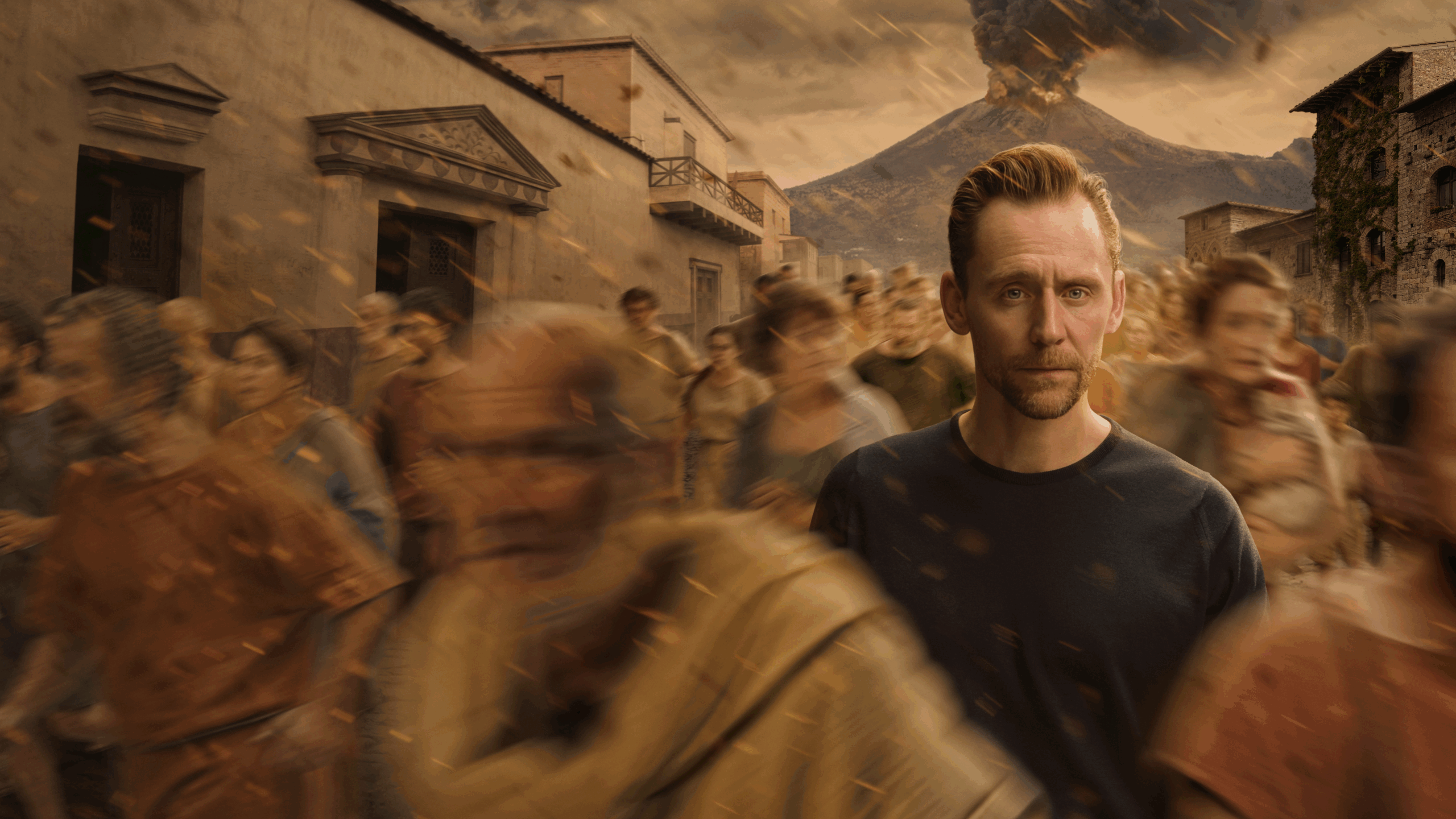
In this era of streaming, it’s become a tried-and-true content format to pair a celebrity host with some sort of nonfiction subject matter, banking on popular appeal and that celebrity’s own apparent passion for the topic to draw in viewers. It wasn’t a big surprise, then, when we happened to notice a new National Geographic miniseries on Pompeii hosted by Tom Hiddleston as we scrolled through Hulu. The charismatic (and in some quarters of fandom, obsessively followed) Hiddleston certainly seemed like a natural choice for such a program, especially, as we soon learned, given his deep interest in the ancient world and Pompeii in particular since his days in university. We idly added it to our Watch Later list—but then we started to notice the reviews popping up on social media. A reviewer from The Guardian alleged that viewers would “cringe so hard you turn to cheese.” Adam White of The Independent wrote that “Tom Hiddleston’s history show is so unintentionally hilarious I had to stop myself from shrieking.” Yet interestingly enough, these reviews actually were not on the whole negative, and other opinions from around the internet were unequivocally, even emotionally, positive. Clearly, we needed to explore this conversation for ourselves sooner rather than later.
Let’s get this out of the way first: those colorfully-framed reviews were not wrong. For two adults—history nerds, even—in 2026, Pompeii: Out of Time is a deeply goofy experience. We can’t remember ever watching history content that takes itself this deadly seriously, without much hint of self awareness. To call Hiddleston the “host” of the show is almost an understatement; he is the driving force of both its investigation and narrative, making the series more similar to documentaries of personal discovery like Julian Brave NoiseCat’s Sugarcane than other more standard historical fare. The premise is fairly simple: Pompeii is so often a story of death and the preservation of a Roman town at the moment of its destruction, but Hiddleston wants, almost needs, to uncover whether it might also be a story of life, of survival and recovery in the face of disaster. As he explores this research question (complete with true crime or conspiracy theory-esque board of leads and theories), Hiddleston talks with numerous modern experts who conduct him through databases and the archaeological site of Pompeii itself in an effort to illuminate him as far as they’re able. Unlike those other similar documentaries, however, this effort is highly scripted—one might even call it stylized—even though it is presented as a series of informal, organic encounters along the course of Hiddleston’s quest. Contrast that framing with all the hand gesture-based transitions, pausing real time for asides, dramatic timing, and all the earnest, sorrowful glances Hiddleston serves up when not playing a god of mischief and you have what can only be described as a faintly surreal, silly watch.
Digging deeper, though, we actually thought there was a good deal of merit to Pompeii: Out of Time’s approach. Months earlier, we had watched a different National Geographic series on ancient mummies and had bemoaned how it featured purported experts in history and archaeology speculating about non-historical, unanswerable questions as the meat of its exploration. Here, the effect is the opposite. Hiddleston poses the kinds of human interest questions a layman would understandably be fascinated by, but the experts respond with only what information the historical record can provide, with perhaps some immediate, informed speculation based off of it—and always framed as their own, responsible, musings. This also serves to neatly and clearly separate Hiddleston’s narrative and historical recreations (most certainly docudrama here, with dialogue for historical characters we cannot possibly know) from actual history; you are watching a possible story of how events might have happened rather than anything that could be considered a definitive conclusion.
And, it should be said, the history related by Pompeii: Out of Time is good! There’s nothing particularly revelatory about its account of Vesuvius’ eruption and the plight of Herculaneum and Pompeii, but it also doesn’t seem to offer any flimsy or outright false information. Even more so, it is a rarity for historical documentaries to actually engage with their subject matter that are new and different and ask questions not often asked. The consideration of the aftermath of Pompeii, of the reality of survivors and their struggle in what must have been some manner of ancient refugee and humanitarian crisis, is a highly novel and intriguing one—if only something considered more in the abstract than in the details, due to those pesky limitations in the historical record. If one can get past all the earnest Tom Hiddleston-ness of it all, we actually think Pompeii: Out of Time is a pretty good tool for those who teach the ancient world, or enjoy always learning more about it like Tom clearly does.