by Bryan & Heather
Western media is (in)famous for prioritizing stories from Europe and the United States over those of people of color and other parts of the globe. Some progress has been made in recent years to at least make an attempt at telling other tales, but one particular region has been routinely overlooked. Polynesia, and Hawai’i in particular, has been almost a black hole for period dramas. Indeed, with the exception of Disney’s (animated, totally fictional) Moana, movies and shows set in Hawai’i are exclusively modern and feature white people as main characters, with native Hawaiians largely appearing as laidback, folksy side characters—if they even appear at all. To his everlasting chagrin, Bryan even temporarily forgot to consider Polynesia when writing a paper on the start of globalisation in graduate school, dating it from the Spanish landfall in the Philippines despite the fact that New Zealand had yet to be reached by any outside explorer! When trailers for a gritty, “dark history” drama set in early modern Hawai’i began to appear during the summer of 2025, then, we knew we had to check it out.
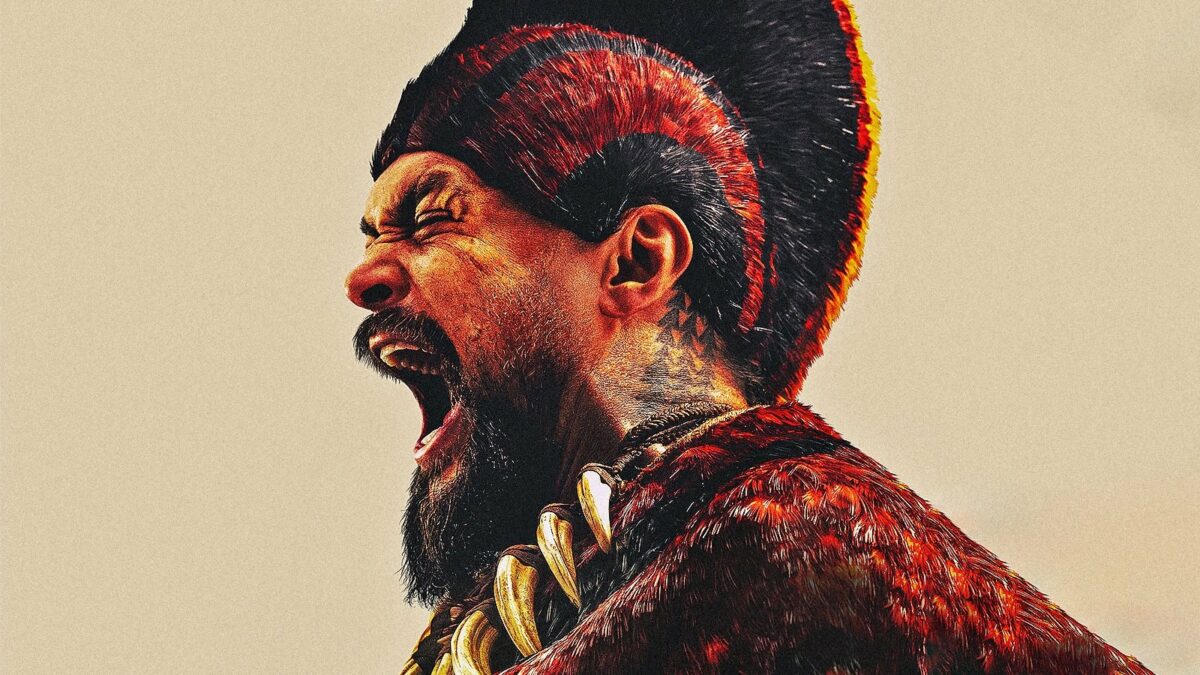
Chief of War has been a decade in the making, and it’s hard to remember the last time we watched a show with this level of care infused into every level of production. Jason Momoa, himself one of the two co-writers and producers of the project, plays the Mauian warrior Kai’iana, the first Hawai’ian chief to voyage beyond the home islands in the modern period. What will eventually become known as the Kingdom of Hawai’i is hopelessly divided into warring petty kingdoms, each island looking out for itself. A prophecy many years ago that a great unifier would rise and end the bloodshed has long since been considered mistaken, and people despair that the killing will ever stop. After Kai’iana and his family are tricked into doing the dirty work of Kai’iana’s bloodthirsty, genocidal uncle and king of Maui Kahekili (Temuera Morrison), Kai’iana finds himself rescued by a passing European vessel. On his long journey to return to his homeland, Kai’iana learns of the doom the Europeans will bring to the islands if they ever arrive in force, but is simultaneously captivated by the promise of gunpowder and how muskets could change the nature of power if he can bring enough back with him. Meanwhile, a different kind of leader emerges on the isle of Hawai’i, a farmer with a gifted strategic mind who cares more about his own people’s welfare than his own martial glory: Kamehameha.
In terms of culture, both material and social, Chief of War is easily one of the most historically accurate show we’ve ever had the pleasure of watching. Not only are all islanders played by actors of Polynesian descent, but most of the show is conducted using the Hawai’ian language—including the entirety of the first two episodes (though it is unclear if it is modern Hawai’ian or in the dialect that would have been spoken in the 18th century). English is only introduced once Kai’iana has learned it, haltingly, from his newfound crewmates and a European castaway has taught it to some of the members of Kamehameha’s home village, and even then it is explicitly only used among Hawai’ians to prevent spies from overhearing what they’re discussing. While this does mean that more direct attention is required of viewers to truly appreciate what’s happening on screen, it’s well worth it, especially considering that Hawai’ian was at one point nearly considered a dead language. If that weren’t enough, reports are that cultural advisors worked on every single production division, faithfully recreating native costumes and weaponry previously only extant in museums and even building entire traditional outrigger canoes from scratch. The result is a product whose veracity fairly bleeds through the screen, presenting Early Modern Hawai’ian and Polynesian culture in its own right, quite consciously shorn of sensationalist and racist caricatures, for the first time in a live action period piece.
There are really only two flaws in Chief of War’s historicity. The first involves the treatment of musketry. Kai’iana’s purchase and championing of firearms as the key to victory for Kamehameha’s forces against his uncle, Keoua (Cliff Curtis), forms a major running plot point across virtually the entire show. And yet, when they are finally deployed in the climactic battle on the slopes of an active, erupting Mauna Loa, they are not only used in piecemeal fashion (rather than in a major, massed volley that could have stopped Keoua cold) but also only feature on screen for about a minute before the action devolves into a frantic, confused melee of individual encounters. On a more major, narrative, note, the character of Kamehameha has been radically altered from his historical counterpart. We were quite pleased to see that Chief of War did not in general fall prey to the regrettable impulse among many modern writers of portraying indigenous peoples as unfailingly noble, moral, and innocent of any whiff of imperialism on their own initiative, this fictional Kamehameha takes on all those qualities as an individual. The historical unifier of Hawai’i was far from a reluctant, peaceful farmer; indeed, the historical Keoua was treacherously killed by Kamehameha after being invited to negotiate a truce. The original framing of the show understandably necessitated a more heroic leader to break the toxic cycle of violence in the islands, but unfortunately the result is not dissimilar to the whitewashing of historical luminaries with which Western society is so familiar (and still struggles to overcome).
If one is suitably careful to separate narrative from historical content, however (as we always must be), Chief of War provides a veritable feast the likes of which occur all too infrequently in modern period pieces. It is, almost by definition, something you’ve never seen before, and we cannot urge you to find a way to watch it quickly enough.